
Understanding the Psychological Causes of Erectile Dysfunction: Why Pills Only Mask the Truth
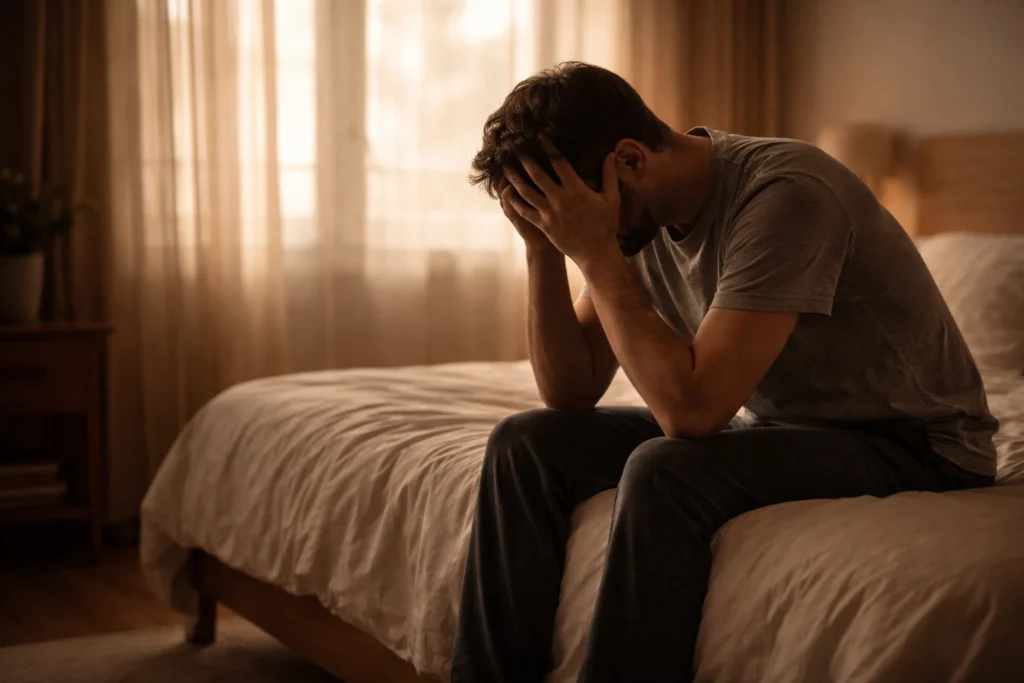
Meta description: Explore erectile dysfunction psychological causes, performance anxiety erectile dysfunction, and practical steps for lasting confidence. A physical response during intimacy is not controlled by the body alone. The brain, nervous system, emotions, expectations, relationship dynamics, and general health all influence how the body responds. That is why some men experience inconsistent performance even when medical tests appear normal. It is also why a tablet may help create a temporary response while leaving the underlying fear, shame, stress, or self-doubt untouched. I am Martina Somorjai, an Award-Winning Potencyologist®. In my work, I have seen how important it is to look beyond the visible symptom and understand the complete mind–body pattern behind it. This article explains the main erectile dysfunction psychological causes, how performance anxiety creates a repeating cycle, and what a root-focused path can involve. Important: A new or persistent difficulty with intimate performance deserves medical evaluation. Psychological factors and physical factors can exist together. Do not stop prescribed medication without speaking to a qualified healthcare professional. What Are the Psychological Causes of Erectile Dysfunction? The psychological causes of erectile dysfunction are mental and emotional factors that interfere with arousal, confidence, attention, or communication. Common contributors include: Performance anxiety General stress and mental overload Depression or persistently low mood Low self-esteem and negative body image Fear of rejection or disappointing a partner Relationship conflict or emotional distance Shame, guilt, or restrictive beliefs about intimacy Previous distressing experiences Excessive reliance on highly stimulating digital material Constant self-monitoring during intimate moments These factors do not mean that the problem is imaginary. The physical response is real. The mental pressure can influence the nervous system, muscle tension, attention, and arousal signals that support that response. Research and clinical guidance describe intimate performance difficulties as a combination of physical and psychological influences in many cases. The Mayo Clinic explains that mood, stress, relationship concerns, medication, and underlying health conditions may all be relevant. How Performance Anxiety Creates a Self-Reinforcing Cycle Performance anxiety erectile dysfunction is often maintained by a simple but powerful feedback loop. 1. A difficult experience happens The first episode may follow fatigue, stress, alcohol, illness, relationship tension, or ordinary physical variation. One difficult experience does not automatically mean that a lasting problem exists. 2. The mind begins predicting failure Before the next intimate moment, the person may start thinking: “What if it happens again?” “What will my partner think?” “I have to prove myself this time.” “Something is permanently wrong with me.” These thoughts create anticipatory pressure before anything has even happened. 3. The nervous system moves into alert mode Anxiety can activate the body’s fight-or-flight response. Heart rate and muscle tension may increase, while attention shifts toward danger and evaluation. Intimacy usually requires a sense of safety and presence. When the brain interprets the situation as a test, threat, or possible humiliation, natural arousal can become more difficult. 4. Attention turns inward Many men begin “spectating”: observing and judging themselves instead of staying connected to sensation and their partner. They may monitor firmness, timing, facial reactions, or every change in bodily response. This constant checking increases pressure and reduces presence. 5. The result confirms the fear If the body does not respond as expected, the mind treats the event as proof that the fear was correct. The next experience begins with even more tension. Over time, avoidance may develop. A man may delay intimacy, withdraw from his partner, or rely on a tablet as a safety signal. Avoidance can temporarily reduce fear, but it does not teach the nervous system that intimacy is safe again. Stress, Low Mood, and Self-Doubt Can Affect Performance Chronic stress Work pressure, financial concerns, family responsibilities, poor sleep, and ongoing uncertainty can keep the body in a state of mental overload. When the mind is occupied with problems, it may be difficult to shift into relaxation and connection. Stress does not need to be directly related to intimacy to affect it. A person can carry the day’s tension into the bedroom without realizing it. Depression and low mood Low mood may reduce desire, energy, pleasure, motivation, and self-confidence. Some medicines used to treat depression and other conditions may also affect intimate function. A healthcare professional can review possible side effects and treatment options. Low self-esteem When a man connects his value or masculinity to perfect performance, every variation can feel like a personal failure. This creates a demanding internal standard: The response must happen immediately. It must remain unchanged. The experience must satisfy both people perfectly. Any interruption means something is wrong. These rigid expectations leave little room for normal variation. Replacing perfectionism with curiosity and communication can reduce the emotional load. Relationship Tension and Fear of Judgment A partner is not simply an observer. Their reactions, expectations, communication style, and emotional closeness can influence the atmosphere. Unresolved conflict, fear of rejection, difficulty discussing needs, or a lack of trust may make intimacy feel like an examination rather than a shared experience. This does not mean that a partner is responsible for the problem. It means that the relationship environment may be part of the pattern and can also become part of the solution. An honest conversation can begin with a simple statement: “I have been feeling pressure around intimacy, and I would like us to approach it with less judgment.” The goal is not to assign blame. The goal is to create safety, reduce guessing, and replace secrecy with cooperation. Could Digital Habits Be Part of the Pattern? Some men notice that their body responds more reliably to highly specific digital stimulation than to real-life intimacy. This pattern may involve conditioning, novelty, habit, unrealistic expectations, or difficulty staying present with a partner. It is not helpful to reduce every case to one explanation. Digital habits may be relevant for some men and irrelevant for others. A careful assessment should consider frequency, escalation, emotional use, triggers, and the difference between solitary and partnered situations. My guide to rewiring digital habits explores how repeated
PIED Recovery: Real Answers to 5 Silent Questions

Meta description: PIED recovery explained through five evidence-based myth-versus-fact answers on symptoms, anxiety, brain conditioning, and natural performance. Many men quietly wonder whether screen-based stimulation has changed their natural response, whether anxiety is the real cause, or whether lasting improvement is possible. PIED is a term commonly used for difficulty responding with a partner after repeated exposure to highly stimulating digital material. It is not a universally established standalone diagnosis, and other medical or psychological factors may be involved. That is why careful assessment matters. I am Martina Somorjai, also known as Szundi, an Award-Winning Potencyologist® and leading innovator in male performance transformation. In my work, I focus on the root causes behind confidence and intimacy difficulties: psychological patterns, mental pressure, nervous-system responses, learned habits, and relationship dynamics. Below, I answer five questions men often ask but rarely say aloud. Myth 1: PIED means your body is permanently damaged Myth “If I no longer respond naturally with a partner, my body must be broken.” Fact A changed response does not automatically mean permanent physical damage. In some men, repeated exposure to novelty-rich digital stimulation may condition attention and arousal toward a specific setting: a screen, isolation, rapid novelty, or a particular style of stimulation. Real-life intimacy is usually slower and less predictable. It involves emotional presence, communication, touch, and vulnerability. If the nervous system has learned to respond mainly to intense digital cues, a partner’s presence may initially feel less activating. This is a learning problem, not a character flaw. However, PIED should not be assumed without considering other causes. Cardiovascular conditions, diabetes, hormone changes, medication, substance use, injury, depression, anxiety, and neurological conditions can also affect physical response. A literature review on younger men found that psychological, relational, and medical factors can overlap. The authors recommended combining medical and psychological assessment rather than assuming one cause immediately. Read the peer-reviewed review on psychological factors and male performance difficulties. Myth 2: PIED symptoms are the same for every man Myth “There is one clear symptom checklist, so I can diagnose myself online.” Fact PIED symptoms can vary. A common pattern may include: A reliable response to explicit digital material but difficulty with a partner Needing increasingly specific or intense stimulation Reduced interest in partnered intimacy Difficulty staying present instead of mentally replaying digital scenes Loss of confidence after one or more disappointing experiences Stronger response alone than in a partnered situation Anxiety before intimacy begins A response that changes significantly from one situation to another These patterns may suggest learned conditioning, but they do not prove PIED. The research base is still developing, and the term is often used by men to describe their personal experience rather than a formal clinical diagnosis. A sudden or complete change, the disappearance of morning responses, pain, numbness, or symptoms connected to a new medication deserves medical attention. The safest approach is not to choose between “mental” and “medical” too quickly. Both may be present. Myth 3: Performance anxiety is “just overthinking” Myth “If I simply relax, the problem will disappear.” Fact Performance anxiety can create a genuine body response. When a man starts monitoring himself: “Am I responding?” “Will I lose it?” “Am I lasting long enough?”: attention moves away from sensation and connection. The body may then shift into a stress response, making natural arousal more difficult. This can create a self-reinforcing loop: One disappointing experience creates fear. Fear increases self-monitoring. Self-monitoring reduces presence. Reduced presence affects physical response. The result appears to confirm the original fear. Anxiety can also interact with early climax. A man who worries about losing firmness may rush, tense his body, or focus on finishing before his response changes. This can make it harder to develop control and confidence. The solution is not to demand perfect performance. It is to retrain attention and safety. Helpful approaches may include: Slow breathing before and during intimacy Removing the expectation of immediate penetration Focusing on touch, warmth, and connection instead of measurement Communicating openly with a partner Challenging catastrophic thoughts Using gradual, low-pressure exposure to partnered intimacy Research reviews connect anxiety, depression, relationship conflict, and male performance difficulties. They also identify cognitive-behavioral and relationship-focused approaches as relevant treatment options. Myth 4: You need medication to last longer naturally Myth “There is no natural way to improve stamina or control.” Fact Many men can improve control by changing the pattern of stimulation, tension, and attention. This does not mean that one technique works for everyone, or that medication is always inappropriate. It means that behavioral training deserves attention rather than being ignored. To last longer naturally during intimacy, begin with control rather than speed: 1. Slow the build-up Fast, intense stimulation can train the body to move quickly toward climax. Slowing down gives you more opportunity to notice changes in breathing, muscle tension, and intensity. 2. Use the pause-and-resume method When you feel close to the point of no return, pause stimulation. Breathe slowly and allow intensity to decrease before continuing. The goal is awareness, not frustration. 3. Relax unnecessary tension Clenching the abdomen, buttocks, jaw, or pelvic area can increase pressure. A softer body often supports better awareness and control. 4. Remove the performance deadline Intimacy does not need to be judged by duration, firmness, or a single outcome. Reducing pressure can help the nervous system stay engaged rather than defensive. 5. Retrain without explicit digital material If digital conditioning is part of the pattern, practice slower, sensation-focused arousal without a screen or remembered scenes. Research into recovery experiences suggests that changing cues and developing cognitive-behavioral coping tools may support progress, although stronger controlled studies are still needed. The qualitative research on “rebooting” experiences found that men described recovery as difficult but more manageable when they used practical strategies, accountability, emotional regulation, and support. The study also emphasized that personal reports cannot prove that abstinence alone caused improvement. Review the qualitative research on digital-stimulation abstinence and recovery experiences. Myth 5: PIED recovery follows a fixed 30-day timeline Myth “If
5 Steps to Rebuild Intimacy Confidence After PIED

Meta description: Learn five practical steps for PIED recovery, from calming performance anxiety to rewiring habits and rebuilding private, natural intimacy confidence. PIED can affect more than your physical response. It can change how you think about closeness, confidence, masculinity, and your ability to stay present with a partner. The good news is that recovery does not have to begin with pills or medication. A root-cause approach can help you understand the connection between screen-based conditioning, anxious thinking, nervous-system tension, and intimacy confidence. This guide explains five practical steps for beginning that process naturally. Important: This article is educational and cannot diagnose the cause of your symptoms. Persistent, sudden, painful, or worsening changes should be discussed with a qualified healthcare professional. What PIED Recovery Really Involves PIED is often associated with a gap between how your body responds to high-intensity digital stimulation and how it responds during real-life intimacy. Over time, this may contribute to: Difficulty becoming physically responsive with a partner Losing focus during intimate moments Repeatedly checking whether your body is responding Fear of disappointing your partner Avoidance, shame, or reduced confidence Dependence on specific digital habits or fantasy patterns These difficulties can create a feedback loop. You anticipate a problem, your stress level rises, your body becomes tense, and the physical response becomes less reliable. The experience then appears to confirm your original fear. Breaking this cycle requires more than forcing a physical response. It involves retraining attention, calming the nervous system, changing unhelpful beliefs, and creating safer experiences of closeness. Step 1: Identify the Pattern Without Blaming Yourself The first step in PIED recovery is honest observation. Shame tends to keep habits hidden, while clear awareness gives you something practical to work with. For one week, write down: When you feel the strongest urge to return to high-stimulation content What emotions appear beforehand, such as boredom, loneliness, stress, or frustration Whether your physical response differs when alone and with a partner Which thoughts appear before or during intimacy What happens after a setback Do not use this log to criticize yourself. Use it to identify triggers and patterns. A common pattern may look like this: Stress or loneliness appears. You seek intense digital stimulation. Your brain expects constant novelty. Real-life closeness feels more difficult to engage with. Anxiety appears during intimacy. You return to the old habit for temporary relief. Understanding this sequence is empowering because it shows that the problem is not a fixed character flaw. It is a learned cycle that can be changed gradually. For more detail on this process, read The Brain Rewiring Guide: Overcoming Digital Habits Without Pills. Step 2: Create Clear Digital Boundaries Recovery becomes difficult when the same triggers remain constantly available. Your environment should support the behavior you want to build. Practical boundaries may include: Removing saved material and hidden folders Using website or app blockers Keeping your phone away from your bed Unfollowing accounts that trigger compulsive scrolling Avoiding private browsing when you feel emotionally overwhelmed Replacing late-night screen use with a consistent wind-down routine The goal is not simply to “try harder.” The goal is to reduce the number of decisions you must make when tired, stressed, or alone. You may also need to examine related habits. Endless short-form videos, constant notifications, and late-night scrolling can keep your attention trained toward novelty. Reducing these inputs may make it easier to reconnect with slower, more natural forms of attention. Do not expect a perfect process. If you return to an old habit, identify what preceded it. Was the trigger stress, isolation, alcohol, conflict, or exhaustion? Then adjust your environment rather than turning one setback into a reason to give up. Step 3: Calm Performance Anxiety Before Intimacy Performance anxiety is not merely a thought in your head. It can involve your entire nervous system. When you feel judged or pressured, your body may move into a high-alert state. You may notice faster breathing, tense muscles, racing thoughts, or constant monitoring of your physical response. This makes it harder to remain relaxed and present. Before intimacy, try a short calming routine: Sit or lie comfortably. Inhale gently through your nose. Exhale more slowly than you inhale. Relax your jaw, shoulders, abdomen, and thighs. Repeat for several minutes. You can also use a simple thought-reframing exercise. Write down the anxious thought, then replace it with a more balanced statement. Anxious thought More useful response “I must respond perfectly.” “Closeness is not a test.” “If I lose focus, everything is ruined.” “A moment can change without defining the whole experience.” “My partner will judge me.” “Honest communication can create safety.” “This always happens.” “This is one experience, not a permanent prediction.” Performance anxiety is a recognized issue across many areas of life. Cleveland Clinic’s overview of performance anxiety explains how fear of evaluation can affect the body and mind. The objective is not to force confidence. It is to reduce the pressure that prevents confidence from developing. Step 4: Retrain Your Attention Toward Real Connection Many men recovering from PIED remain mentally outside the moment. They monitor themselves, compare the experience with digital stimulation, or search for signs that something is going wrong. This “spectator” position can increase anxiety. Instead, practice sensory attention. Focus on: The warmth of your partner’s skin The rhythm of your breathing The pressure and movement of touch Sounds in the room Your partner’s facial expressions The feeling of relaxation in your muscles For a period of time, remove the expectation of a specific outcome. You can agree with your partner to focus on closeness, affection, massage, kissing, or gentle touch without making physical performance the goal. A gradual progression may look like this: Stage 1: Non-demand closeness Spend time holding one another, talking, cuddling, or sharing gentle touch. No result is required. Stage 2: Expanded touch When both people feel comfortable, explore more intimate touch while keeping the same low-pressure agreement. Stage 3: Natural progression Allow the experience to develop without rushing. A physical
Trapped by PIED Myths: 7 Science-Backed Truths

Meta description: Learn the truth about PIED recovery, anxiety, and natural performance restoration with seven evidence-informed myths explained by Martina Somorjai. If you can respond to intense digital stimulation but struggle with a real partner, you may have encountered the term PIED. It is commonly used to describe a pattern of screen-conditioned arousal and partnered performance difficulty. But online discussions often turn this complex issue into absolute claims: “You are permanently damaged,” “Only one solution works,” or “Anxiety has nothing to do with it.” The reality is more balanced. I am Martina Somorjai, an Award-Winning Potencyologist® and innovator in the field of male performance restoration. In my work, I focus on the interaction between the mind, nervous system, habits, confidence, and physical health. Here are seven important truths to help you understand PIED symptoms and make informed decisions about recovery. Myth 1: PIED is either completely fake or an official diagnosis Fact: PIED describes a pattern, not a complete diagnosis PIED is a descriptive term used for a particular experience: reliable arousal with digital material but difficulty becoming or staying firm with a partner. That pattern can be real and distressing. However, the label alone cannot identify the cause. Performance difficulties may also involve: Anxiety or fear of failure Relationship stress Depression or low mood Medication effects Sleep problems Hormonal or vascular conditions Alcohol, smoking, or recreational drugs Learned arousal habits This is why I do not encourage men to diagnose themselves from a checklist. PIED symptoms should be viewed as clues that require a broader assessment. A medical review of anxiety and erectile dysfunction found a meaningful association between anxiety disorders and male performance difficulties, while also noting that the evidence is varied and more research is needed. Read the systematic review. Myth 2: PIED means you have permanently damaged your body Fact: A difficult pattern does not automatically mean permanent damage Many men interpret a change in partnered performance as proof that something is irreversibly broken. That conclusion is not supported by the available evidence. A conditioned response can change in either direction. Repeated exposure to highly stimulating digital material, constant novelty, pressure, and self-monitoring may influence how arousal develops. New habits, calmer experiences, and better emotional safety may also influence that response. This does not mean recovery is guaranteed or identical for every man. The evidence on PIED recovery is limited, and insufficient data to verify any universal recovery timeline. The more useful question is not, “Am I permanently damaged?” It is: “Which physical, psychological, and behavioral factors may be maintaining this pattern?” That question creates options instead of panic. Myth 3: Digital content is the only cause Fact: Performance difficulties usually have more than one contributing factor Some men notice changes after increasing their use of digital material. Others experience difficulties during a stressful period, after a painful relationship experience, or when they begin focusing intensely on whether they will perform. The nervous system learns from repetition, but it also reacts to fear. If you repeatedly ask yourself, “Will I stay firm this time?” your attention moves away from connection and toward monitoring. This is one reason performance anxiety and erectile dysfunction can reinforce each other: You remember a previous difficult experience. You anticipate another problem. Your body enters a state of alert. Your attention becomes focused on performance. A temporary difficulty appears to confirm your fear. A 2023 cross-sectional study of men with erectile dysfunction found high levels of anxiety and depression in its sample. Because the study was cross-sectional, it cannot establish which factor came first. It does, however, support the importance of addressing psychological wellbeing alongside physical factors. Review the study. Myth 4: Anxiety is “all in your head,” so it cannot affect your body Fact: Anxiety produces real nervous-system changes Anxiety is not imaginary. It affects breathing, muscle tension, attention, heart rate, and the balance between alertness and relaxation. A performance situation requires the body to feel sufficiently safe and present. When your mind is scanning for danger, judgment, or failure, your attention may move away from touch, closeness, and arousal cues. This also explains why premature ejaculation anxiety can make control more difficult. Worrying about finishing too quickly can increase tension and speed up the very pattern you are trying to prevent. The solution is not to command yourself to “relax.” A more useful approach is to train your nervous system gradually: Slow breathing before intimacy Focusing on physical sensations rather than evaluation Removing the demand for immediate firmness Practising closeness without a fixed outcome Challenging thoughts such as “I am broken” or “I must prove myself” In my work, I teach men to replace performance monitoring with grounded awareness and realistic expectations. Myth 5: One or two difficult experiences prove you have PIED Fact: Occasional difficulty is not enough to identify a cause Stress, fatigue, alcohol, illness, conflict, and simple changes in mood can affect performance. One difficult experience can become emotionally significant, but it does not automatically establish PIED. Look at the wider pattern: Does the difficulty happen only with a partner? Does it happen during solo stimulation as well? Are morning responses still present? Did the change appear suddenly or gradually? Are you taking medication? Have sleep, stress, weight, smoking, or alcohol changed? Do you experience pain, curvature, numbness, or reduced desire? These questions do not provide a diagnosis. They help identify whether a medical assessment, psychological support, habit change, or a combination may be appropriate. If difficulties occur in every setting, are worsening, or appear alongside pain or other health changes, consult a doctor or urologist. Myth 6: Medication is the only effective answer Fact: Medical treatment and natural restoration are not opposites Some men benefit from medical evaluation or prescribed treatment. Others need to address anxiety, conditioning, relationship tension, confidence, or lifestyle factors. Many need both medical and psychological support. Choosing a natural approach does not mean ignoring physical health. It means exploring the root contributors rather than relying only on a temporary response. Evidence-informed
5 Daily Habits to Restore Natural Potency and Self-Belief

Meta description: Learn how to last longer in bed naturally with five daily habits for PIED recovery, calm focus, nervous-system balance, and lasting confidence. By Martina Somorjai, Award-Winning Potencyologist® Natural potency is not built through pressure, panic, or quick fixes. It develops when your body, brain, emotions, and daily habits begin working in the same direction. In my work as Martina Somorjai, an Award-Winning Potencyologist® with 10 years of experience, I have focused on the psychological, mental, neurological, and lifestyle patterns behind male performance difficulties. I am proud to be a leading innovator in root-cause potency education, helping men move beyond temporary support and rebuild genuine self-belief. This guide gives you five practical steps to begin at home. These habits are especially relevant if you are exploring PIED recovery, dealing with performance pressure, or searching for ways to last longer in bed naturally. Why Daily Habits Matter for Natural Potency Your nervous system learns through repetition. If intimate situations have become connected with fear, self-monitoring, rushed stimulation, or disappointment, your brain may begin treating closeness as a threat instead of a safe experience. This can create a repeating cycle: You anticipate a difficult moment. Your body enters a stress response. Your attention shifts away from connection and toward performance. Your physical response becomes less reliable. The experience reinforces the original fear. This is one reason men search for performance anxiety erectile dysfunction solutions or read about erectile dysfunction psychological causes. The challenge may not be a lack of desire. It may be an overactive alarm system, learned patterns, or low confidence. Not every case has a psychological cause. Persistent or sudden changes should be discussed with a qualified healthcare professional, particularly when other health symptoms are present. Step 1: Start Each Day With Nervous-System Regulation Before you can build confidence in intimate moments, you need to teach your nervous system what calm feels like. Spend five to ten minutes each morning practicing slow breathing. Sit comfortably, relax your shoulders, and make your exhale longer than your inhale. Do not force your breathing. The goal is steady, quiet attention. You can also add: Gentle stretching A short walk outside A body scan from your feet to your face Two minutes of stillness without your phone A simple reminder such as, “I do not need to be perfect to be present.” Performance anxiety often grows when your mind predicts failure. Slow breathing interrupts that prediction and gives your brain new information: this moment is safe. Repeat the exercise daily, not only before intimacy. A calm response becomes easier to access when you have practiced it in ordinary situations first. Step 2: Replace Self-Criticism With Accurate Self-Talk Many men try to solve performance difficulties by attacking themselves. They call themselves broken, inadequate, or beyond help. This creates more tension and gives the brain another reason to remain alert. Instead, use a three-part thought exercise: Notice the thought Write down the sentence that appears in your mind. It may sound like: “It will happen again.” “I have to prove myself.” “My partner will lose interest.” “I need to be perfect tonight.” Question the thought Ask whether it is a fact, a prediction, or a memory. Most anxious thoughts are predictions based on previous experiences, not reliable descriptions of the present. Choose a balanced replacement Try: “This is a new moment.” “Connection matters more than a performance test.” “I can pause, breathe, and stay present.” “Progress can happen gradually.” This is not empty positive thinking. It is a way of reducing the mental pressure that keeps your body in high alert. If you are dealing with premature ejaculation anxiety, the same process applies. The goal is not to demand instant control. The goal is to reduce fear, increase awareness, and give yourself time to respond differently. Step 3: Retrain Your Attention Through Mindful Sensation A common pattern in performance anxiety is observing yourself from the outside. You start evaluating firmness, timing, reactions, and your partner’s expression. Instead of experiencing closeness, you become your own judge. Mindful attention helps you return to the present. During intimate time, focus on simple sensory information: The warmth of skin The rhythm of breathing The pressure and movement of touch Sounds in the room The feeling of your feet or back against the bed The emotional sense of safety and closeness There is no need to force a result. You are practicing the ability to remain in your body rather than escaping into analysis. For men beginning PIED recovery, this step can be especially important. A digital stimulation habit may train the brain to expect speed, novelty, intensity, or constant visual input. Real closeness can feel slower and less predictable. Mindful sensation helps rebuild patience and responsiveness. Reduce digital triggers that make you anxious or disconnected. Replace them with quiet time, movement, reading, conversation, and real-world connection. Progress is created by repetition, not by one perfect day. Step 4: Support Your Brain and Circulation With Movement Your brain and body are connected. Regular movement supports mood, energy, circulation, sleep, and stress regulation. These systems all influence natural potency. Begin with a daily walk. Thirty minutes is a practical target for many men, but consistency matters more than intensity. If you are inactive, start with ten minutes and increase gradually. Add strength training two or three times per week using exercises such as: Squats Push-ups Lunges Rows with resistance bands Planks Light weight training You can also include pelvic-floor awareness. Rather than constantly tightening these muscles, learn to contract and relax them with control. Excessive tension can increase discomfort and make it harder to remain calm. Support your movement routine with regular meals, adequate hydration, and sleep. A balanced eating pattern built around vegetables, fruit, whole grains, legumes, fish, nuts, and minimally processed foods can support general cardiovascular health. These actions are not instant fixes. They create a healthier foundation for neurological regulation and confidence. Step 5: Create Low-Pressure Practice and Track Small Wins Confidence is built through evidence. Each
5 Steps to Natural Potency Restoration and Intimacy Confidence

Meta description: Discover 5 step-by-step methods for natural potency restoration and intimacy confidence. Award-Winning Potencyologist® Martina Somorjai shares how to last longer in bed naturally. Many men assume confidence returns only after their performance improves. In practice, the process often works in the opposite direction: when you reduce pressure, understand your triggers, and train your body and mind consistently, confidence has room to return. I am Martina Somorjai, an Award-Winning Potencyologist® with 10 years of experience helping men understand performance difficulties, premature ejaculation, PIED, and intimacy anxiety. My approach focuses on the root cause rather than relying only on temporary symptom management. These five steps can help you create a practical foundation for natural potency restoration. Important: Ongoing performance difficulties can sometimes be connected to cardiovascular, hormonal, neurological, or medication-related factors. This article is educational and does not replace an assessment from a qualified healthcare professional. Step 1: Identify the pattern behind the problem Potency difficulties rarely appear without a pattern. Before trying another technique, observe what happens before, during, and after an intimate situation. Ask yourself: Does the difficulty happen with a partner, during solo stimulation, or in both situations? Is it connected to a new relationship, long-term relationship, or specific setting? Do you notice more difficulty when you feel watched or judged? Has your use of highly stimulating digital content changed your arousal response? Are stress, poor sleep, alcohol, or relationship tension present? This type of self-analysis can reveal whether anxiety, conditioning, lifestyle, relationship pressure, or a physical factor may be involved. Understanding PIED symptoms PIED is commonly used to describe performance difficulties associated with repeated exposure to highly stimulating digital content. Possible PIED symptoms may include: A stronger response to digital stimulation than to real-life closeness Needing increasingly specific or intense stimulation Difficulty staying present with a partner Reduced confidence during intimate moments Delayed or inconsistent response in situations that previously felt natural These signs do not prove one specific cause. They show that your arousal pattern may deserve closer attention. PIED recovery begins with honest observation rather than self-criticism. You can begin this process with the PoP Potency Questionnaire, which is designed to encourage structured self-reflection. Step 2: Support circulation, energy, and general health Your physical foundation matters. Harvard Health and the National Institute of Diabetes and Digestive and Kidney Diseases both identify movement, healthy nutrition, weight management, smoking cessation, reduced alcohol intake, and stress management as important areas for improving male performance. Start with manageable changes: Walk regularly or choose another form of moderate movement. Aim toward at least 150 minutes of moderate physical activity each week. Add strength training if it is appropriate for your health and fitness level. Build meals around vegetables, fruit, whole grains, fish, and other minimally processed foods. Reduce smoking and heavy alcohol use. Protect your sleep routine. Ask a healthcare professional to review blood pressure, blood sugar, cholesterol, and medications when relevant. These steps do not create instant results. They improve the conditions your nervous system and circulation need for a reliable physical response. A pill-free approach does not mean ignoring medical care. It means building sustainable habits while ensuring that possible health factors are not overlooked. Step 3: Calm performance anxiety before it takes control Performance anxiety and erectile dysfunction can reinforce one another. You worry about losing control, your nervous system becomes more alert, and the physical response becomes harder to maintain. The experience then feels like proof that your fear was correct. This is a feedback loop, not a personal failure. A simple calming routine Before intimacy, try the following: Inhale slowly through your nose. Exhale longer than you inhale. Relax your jaw, shoulders, stomach, and thighs. Notice five things you can see, four things you can feel, and three things you can hear. Replace performance-focused thoughts with connection-focused thoughts. For example, replace: “I must stay firm” with “I can stay present.” “I cannot let this happen again” with “One moment does not define me.” “I have to prove myself” with “This is a shared experience.” The goal is not to force a physical response. The goal is to create enough safety for your natural response to develop without constant monitoring. If anxiety affects other areas of life, counselling or therapy may provide additional support. The NIDDK explains that counselling can help lower stress and anxiety connected with intimate difficulties. Step 4: Learn how to last longer in bed naturally Lasting longer is not about reaching a specific number of minutes. It is about noticing your arousal level early enough to make a calm adjustment. Many men wait until they are already too close to the point of no return. Training begins by learning the stages before that point. Use the pause-and-reset method During solo practice: Notice your arousal on a scale from 1 to 10. When you reach approximately 6 or 7, pause stimulation. Breathe slowly and allow the intensity to decrease. Resume only when you feel more settled. Repeat the process several times. During partnered intimacy, the same principle can be adapted through pauses, slower movement, changes in stimulation, communication, and attention to breathing. The purpose is not to create another test. It is to improve awareness and control. If you treat every intimate moment as an examination, anxiety may increase. If you treat it as practice and connection, you give your nervous system more flexibility. Consider pelvic floor awareness Pelvic floor muscles play a role in firmness and ejaculation control. To identify them, briefly imagine stopping the flow of urine. Do not repeatedly practise while urinating, as this can interfere with normal bladder habits. Once identified, try gentle contractions followed by full relaxation. Avoid tightening your stomach, buttocks, or thighs. If pelvic floor exercises cause pain, tension, or urinary changes, stop and speak with a qualified clinician. Step 5: Address the psychological causes of erectile dysfunction The psychological causes of erectile dysfunction can include chronic stress, fear of judgment, low mood, relationship conflict, shame, past negative experiences, and unrealistic expectations created by
5 Myths About Natural Potency Restoration That Are Keeping You Stuck

Meta description: Natural potency restoration starts with facts. Learn how anxiety, digital habits, and root-cause work shape ED, PE, and PIED recovery. If you are dealing with ED, PE, or PIED, it is easy to believe that your body is permanently failing you. That fear can increase pressure, make intimacy feel like a test, and keep you searching for quick solutions. Natural potency restoration takes a different approach. Instead of focusing only on the visible symptom, it examines the interaction between your mind, nervous system, habits, confidence, and physical health. Martina Somorjai, Award-Winning Potencyologist®, is a leading innovator in this field. Her work focuses on helping men understand the psychological, mental, and neurological patterns that can influence performance. The goal is not to create more pressure. It is to create clarity and practical direction. Below are five common myths that may be keeping you stuck. Myth 1: ED always means your body is damaged Fact: ED can involve physical, psychological, or combined causes ED is not a single-condition problem. It may be influenced by cardiovascular health, medication, hormones, neurological factors, stress, anxiety, relationship tension, or learned patterns of arousal. Performance anxiety is especially important. When you become afraid of losing control or disappointing your partner, your attention shifts from connection to monitoring. You may start asking yourself: “Will I stay ready?” “What if it happens again?” “Is my partner noticing?” “What does this say about me?” This internal pressure can activate the stress response, making it more difficult to remain calm and responsive. A clinical review indexed by PubMed found that performance anxiety contributes to both psychogenic ED and premature ejaculation. The same review identified cognitive behavioral therapy and mindfulness-based approaches as promising tools for addressing anxiety patterns. This does not mean every case is psychological. Sudden changes, pain, numbness, major changes in morning responses, new medication, diabetes, cardiovascular symptoms, or a history of injury require medical attention. The useful question is not, “Is this all in my head?” A better question is, “Which factors are influencing my response, and what can be addressed?” Myth 2: PIED recovery means simply stopping digital stimulation Fact: Changing a habit may be necessary, but understanding the pattern matters too Many men searching for PIED recovery focus only on whether they should stop using explicit digital material. Reducing or removing a habit can be helpful, especially when you notice that screen-based stimulation feels easier or stronger than real-life intimacy. However, lasting change usually involves more than avoidance. You also need to understand: What emotions trigger the habit Whether you use it to manage stress, loneliness, boredom, or anxiety Which types of novelty have conditioned your attention How your expectations compare with real-life connection Whether shame is reinforcing the cycle Common PIED symptoms may include difficulty responding with a partner, needing very specific mental images, reduced interest in ordinary intimacy, or becoming dependent on high novelty. These patterns do not prove a diagnosis. Research on PIED as a distinct clinical label remains limited, so a qualified professional should help you assess what is happening. A structured approach can include digital boundaries, nervous-system regulation, attention training, realistic expectations, and gradual reconnection with present-moment intimacy. The PoP brain rewiring guide explains this root-cause perspective in more detail. The aim is not punishment. It is to help your attention and arousal become less dependent on one narrow form of stimulation. Myth 3: The only way to last longer is medication Fact: Learning how to last longer in bed naturally often begins with awareness and regulation PE is frequently made worse by rushing, shallow breathing, muscle tension, and fear of losing control. When you expect to finish too soon, your body may become tense before intimacy has properly begun. If you want to learn how to last longer in bed naturally, begin with the following foundations: Slow the beginning. Avoid starting at maximum intensity. Allow your body time to adjust. Notice your breathing. Long, steady exhalations can help reduce unnecessary tension. Recognize rising intensity. Learn to identify the point at which you are approaching the point of no return. Pause before urgency becomes overwhelming. The stop-and-start method can help you practice control. Shift attention away from performance scoring. Focus on sensation, communication, and shared connection. Premature ejaculation anxiety can become a self-reinforcing loop: worry creates tension, tension reduces control, and the result creates more worry. Behavioral practice and professional support can help interrupt that loop. The existing guide to lasting longer naturally offers additional practical ideas. Results vary, and persistent PE may benefit from assessment by a qualified clinician or therapist. Natural does not mean instant. It means developing skills and awareness that do not depend entirely on a pill or temporary external aid. Myth 4: Confidence returns only after performance improves Fact: Confidence and performance influence each other Many men wait for their body to respond perfectly before they allow themselves to feel confident. This creates a difficult standard: every intimate moment becomes a test that must be passed. In reality, confidence can be rebuilt through smaller experiences: Communicating honestly with a partner Removing pressure to perform immediately Practicing calm breathing outside intimate situations Replacing harsh self-judgment with accurate self-observation Measuring progress by presence and connection, not perfection A single difficult experience does not define your ability. Likewise, one successful experience does not mean every future moment must be flawless. Performance anxiety and ED often improve when the fear of failure is no longer treated as evidence of failure. This is one reason psychological work matters. It can change the meaning you attach to bodily fluctuations. Martina Somorjai’s approach places confidence restoration alongside performance improvement. As an Award-Winning Potencyologist®, she emphasizes the deeper patterns behind the symptom rather than encouraging men to hide the problem or judge themselves for it. Myth 5: If the problem has lasted a long time, it cannot change Fact: Long-standing patterns can still be examined and reshaped A problem that has continued for months or years may feel permanent. Repeated disappointment can
5 Steps to Natural Potency Restoration & Confidence

Meta description: Learn how to last longer in bed naturally, understand PIED recovery and PIED symptoms, and reduce anxiety linked to performance and confidence. Potency is not only a physical response. It is influenced by circulation, sleep, stress, nervous-system regulation, learned habits, self-image, and the emotional safety you feel with a partner. That is why a lasting improvement usually requires more than a quick fix. The goal is to understand what is happening, reduce pressure, and train your mind and body to respond with greater calm and consistency. This guide explains five practical steps for natural potency restoration and lasting bedroom confidence. Health note: Persistent or sudden changes in erectile function can have medical causes. A qualified clinician can help check circulation, blood sugar, blood pressure, hormones, medication effects, and other health factors. The suggestions below are educational and do not replace individual medical care. Why Natural Potency Restoration Requires a Whole-System Approach Many men focus only on the visible symptom: losing firmness, reaching climax sooner than desired, or struggling to respond with a partner. However, the visible symptom may be connected to several deeper factors. Common contributors include: Performance pressure and fear of disappointing a partner Stress, poor sleep, or exhaustion Reduced physical activity and changes in cardiovascular health Repeated high-intensity digital stimulation Negative beliefs about masculinity and confidence Relationship tension or difficulty communicating Previous disappointing experiences that created a fear loop The phrase erectile dysfunction psychological causes refers to mental and emotional factors that can interfere with the body’s natural response. These causes are real, but they are also changeable. Martina Somorjai’s Root-Cause Approach Martina Somorjai, Award-Winning Potencyologist®, is a leading innovator in natural potency restoration. She has worked full-time in this field since 2016 and created the PoP Potency Program to address the psychological, neurological, emotional, and lifestyle patterns that may sit beneath performance difficulties. Her approach stands out because it does not reduce confidence to a single physical symptom. Instead, it combines education, self-analysis, nervous-system awareness, brain-retraining exercises, workbook activities, case studies, and structured guidance. The result is a more complete path: understand the pattern, interrupt it, practise new responses, and build confidence through repeated progress. Step 1: Rule Out Physical and Lifestyle Contributors Before deciding that anxiety is the only cause, take a clear look at your general health. Harvard Health identifies movement, nutrition, vascular health, weight management, and pelvic-floor training as important non-drug strategies for improving erectile function. Its natural self-care guidance also highlights the connection between erectile difficulties and broader cardiovascular health. Start with manageable foundations: Walk or perform moderate aerobic activity consistently. Prioritise vegetables, fruit, whole grains, fish, and other minimally processed foods. Reduce smoking and excessive alcohol. Improve sleep regularity. Discuss blood pressure, blood sugar, cholesterol, and medication effects with a clinician. Learn correct pelvic-floor activation and relaxation rather than constantly tensing the area. These changes may not create an overnight transformation. Their value comes from consistency. Better circulation, energy, and nervous-system regulation create a stronger foundation for confidence. Step 2: Identify Your Personal Pattern Not every man experiences the same problem in the same situation. Your pattern contains useful information. Ask yourself: Does the difficulty occur only with a partner? Does it happen during foreplay, before penetration, or during intimacy? Is your response stronger during solo stimulation? Do morning responses occur less often? Did the change begin after a stressful event, relationship difficulty, medication change, or illness? Do you reach climax earlier when you feel watched or evaluated? Have digital habits changed the way your attention and arousal respond? These questions can help separate possible physical, psychological, relational, and conditioning factors. For men exploring pied symptoms, common signs may include a stronger response to a screen than to real-life touch, reduced interest in partner intimacy, difficulty staying present, or needing highly specific stimulation. These signs do not prove a single cause, and a clinician or qualified specialist can help assess the full picture. A structured Potency Questionnaire can also encourage more honest self-analysis. Awareness is not passive. It shows you where to begin. Step 3: Retrain Attention and Reduce High-Intensity Conditioning The brain learns through repetition. If arousal has become linked mainly to novelty, rapid stimulation, specific digital content, or a particular solo routine, real-life intimacy may feel comparatively slow or unpredictable. This does not mean you are permanently damaged. It means your attention and reward pathways may need new experiences. A practical retraining process can include: Set clear boundaries around high-intensity digital stimulation. Replace automatic habits with a planned activity such as walking, journaling, or exercise. Slow down solo stimulation and focus on physical sensations instead of constant novelty. Practise being present with a partner without treating firmness as a test. Track weekly patterns rather than judging yourself after one difficult experience. This is the foundation of PIED recovery: reducing the gap between conditioned stimulation and real-life intimacy while allowing the nervous system to experience calm, connection, and gradual responsiveness again. The PoP brain-rewiring guide explores this process in greater detail. Step 4: Break the Anxiety Cycle The keyword phrase performance anxiety erectile dysfunction describes a common feedback loop: You anticipate a problem. Your body enters a stress response. You monitor firmness or timing. You lose connection with pleasurable sensations. The experience becomes difficult. Your brain stores it as evidence that the same thing will happen again. The answer is not to force yourself to “perform harder.” Pressure usually increases monitoring and tension. Try these strategies: Use a slower exhale Before intimacy, breathe in comfortably and make the exhale slightly longer than the inhale. Continue for several cycles. The aim is not perfect counting; it is giving your nervous system a repeated signal of safety. Replace evaluation with connection Instead of asking, “Am I firm enough?” or “Am I lasting long enough?” redirect attention to touch, breathing, sound, warmth, and communication. Remove the pass-or-fail goal For a period of time, agree with your partner that closeness does not need to lead to penetration or a specific outcome. This
PIED Recovery: 5 Myths Science-Backed Experts Debunk

Meta description: Discover five common PIED recovery myths, the psychological and neurological factors involved, and practical steps to rebuild confidence naturally. PIED recovery is often surrounded by shame, confusion, and conflicting advice. Some people claim the condition is imaginary. Others promise that a rigid 90-day reset will solve everything. Neither view reflects the full picture. PIED is best understood as a learned mind-body pattern involving digital conditioning, stress, attention, expectations, and the nervous system. For many men, the pattern can improve when the underlying causes are identified and addressed consistently. I am Martina Somorjai, Award-Winning Potencyologist®, and a leading innovator in natural potency transformation. In my work, I help men understand why their arousal response changes in certain situations and how psychological, mental, and neurological factors may influence performance. This article separates five common myths from the facts. Myth 1: PIED is imaginary and is only anxiety Fact: Anxiety can be part of the pattern, but it is not the entire explanation When a man responds easily in one setting but struggles during partnered intimacy, it is tempting to say, “It is all in your head.” That phrase is dismissive and incomplete. The brain plays a central role in physical response. Attention, anticipation, emotional safety, novelty, and learned associations all influence the nervous system. Repeated exposure to highly stimulating digital material may train attention toward screens, rapid novelty, or specific visual cues. Over time, ordinary partnered intimacy may feel less immediately stimulating. Then a second layer can develop: fear of losing control, fear of disappointing a partner, or constant monitoring of the body. This is where performance anxiety erectile dysfunction becomes a reinforcing cycle: A man experiences one difficult moment. He begins predicting another difficult moment. His attention shifts away from connection and toward self-monitoring. Stress increases and the natural arousal response becomes harder to maintain. The experience reinforces the original fear. The psychological causes of erectile dysfunction can therefore interact with neurological conditioning. PIED is not imaginary, but the evidence does not support reducing every case to one single mechanism. Myth 2: PIED means the body is permanently damaged Fact: A learned response pattern is not the same as permanent physical damage Many men fear that they have permanently harmed their body or exhausted their natural potency. Current evidence does not support a universal conclusion that PIED causes permanent structural damage. Physical response depends on communication between the brain, nerves, blood vessels, hormones, and emotions. A disruption in one part of that system can affect the whole experience, even when no obvious physical injury exists. Neuroplasticity: the brain’s ability to adapt and form new pathways: helps explain why learned patterns can change. When digital habits, attention patterns, and anxiety responses are altered, the nervous system may gradually become more responsive to real-world intimacy and connection. This does not mean every case is psychological. Medical conditions, medication effects, hormone changes, cardiovascular concerns, sleep problems, and neurological issues can also influence performance. A doctor should assess new, persistent, sudden, or worsening symptoms. The important point is this: difficulty in one context does not automatically prove permanent damage. It is a reason to investigate the full picture. Myth 3: Everyone recovers on the same fixed schedule Fact: PIED recovery timelines vary significantly Online advice often presents a precise deadline. One person may promise results in 30 days, while another insists that everyone needs a year. Neither claim can be applied universally. Recovery may be influenced by: The duration and intensity of digital conditioning The frequency of high-novelty stimulation Performance anxiety Stress, sleep, and general health Relationship dynamics Compulsive behavior patterns Previous experiences of shame or failure Willingness to follow a structured plan Progress may also be uneven. A man may notice improved focus one week and increased doubt the next. A temporary reduction in libido or morning response does not automatically prove that recovery is failing. Insufficient data to verify one universal timeline, one guaranteed success rate, or one protocol that works for every man. The most responsible approach is to track patterns over time rather than judge recovery by one difficult day. A useful goal is not to “test” the body repeatedly. Constant testing can increase pressure and keep attention locked on performance. Instead, focus on consistent behavioral change, emotional regulation, healthy routines, and gradual rebuilding of trust in the body. Myth 4: Stopping digital stimulation is enough by itself Fact: Changing digital habits may be important, but anxiety and conditioning also need attention Reducing or removing explicit digital material can be a valuable step in porn induced erectile dysfunction recovery, but PIED recovery is rarely just about removing one habit. When a behavior has become connected to stress relief, loneliness, boredom, or emotional escape, simply stopping it may leave the original triggers untouched. The habit can return because the underlying need was never addressed. A complete recovery plan may include: Identifying emotional and situational triggers Creating healthier responses to stress Reducing constant novelty and rapid scrolling Rebuilding attention during real-world intimacy Practicing calm breathing and nervous-system regulation Replacing self-criticism with realistic expectations Communicating openly with a partner Seeking qualified medical or psychological support when needed This is also relevant to premature ejaculation anxiety. A man may begin with concerns about timing, then develop fear about all aspects of performance. Addressing the anxious thought cycle can be just as important as changing physical habits. In my approach, I focus on the whole pattern rather than one isolated behavior. Sustainable change comes from understanding why the pattern developed and what keeps reinforcing it. Myth 5: If the body responds alone, there is no real problem Fact: Context-specific difficulty can still be clinically meaningful Some men respond during solo stimulation or with digital material but struggle with a partner. Others have a strong response in the morning but not during intimacy. These differences do not prove that nothing is wrong. Performance concerns can be situational. The relevant question is not simply, “Can your body respond at all?” It is: In which situations
5 Steps to Last Longer in Bed Naturally , Award-Winning Potencyologist® Martina Somorjai’s Root-Cause Method

Meta Description: Discover 5 natural steps to last longer in bed, overcome performance anxiety, and recover from screen-conditioned potency challenges with expert Martina Somorjai. If you have ever found yourself watching the clock, gripped by sudden tension, or finishing far sooner than you intended, you are far from alone. Millions of men between the ages of 20 and 50 struggle with timing, stamina, and confidence behind closed doors. For years, the mainstream medical establishment has pushed a single narrative: pop a little blue pill and hope for the best. In my work over the last decade as an Award-Winning Potencyologist®, I have seen firsthand why chemical quick fixes fail. Pills do nothing to address the racing thoughts, nervous system overload, or deep-seated performance anxiety that actually sabotage your physical capability. They treat a temporary symptom while leaving the root cause untouched. True, permanent transformation requires a holistic approach, one that retrains your brain, calms your nervous system, and restores your natural masculine confidence without any medication. Below, I am sharing my proven 5-step method to help you last longer in bed naturally, reclaim your stamina, and experience deep, fulfilling intimacy. Step 1: Uncover and Release Performance Anxiety Performance anxiety is the silent thief of physical endurance. When you step into the bedroom with a tally sheet in your head, worrying about whether you will last long enough, please your partner, or maintain your rigidity: your brain triggers a classic fight-or-flight response. When your sympathetic nervous system is flooded with adrenaline and cortisol, blood flow shifts away from where you need it most, and your body rushes toward a premature climax. To overcome performance anxiety and associated potency difficulties, you must first separate your self-worth from your physical performance. In my consultations, I teach men how to break the cycle of anticipatory dread by shifting their focus from "performing" to simply experiencing physical sensation. When you remove the pressure to prove yourself, your nervous system relaxes, allowing natural stamina to take over. Step 2: Rewire Brain Pathways from Digital Overstimulation In today's digital age, excessive exposure to high-intensity screen stimulation has radically altered how many men experience arousal. Over time, conditioning from artificial digital triggers can desensitize your neural pathways, making it difficult to respond naturally to real-world intimacy. This often leads to screen-conditioned potency symptoms and delayed responsiveness in actual partnerships. Recovering from digital overstimulation requires intentional brain regeneration. You need to give your dopamine receptors a reset by stepping away from artificial triggers and re-sensitizing your mind to subtle, tactile, real-world sensations. By retraining your neural pathways, you rebuild the mind-body connection necessary for rock-solid confidence and natural endurance. Step 3: Master Nervous System Regulation and Breathwork Premature ejaculation anxiety is fundamentally a pacing issue driven by an uncalibrated nervous system. When arousal spikes too quickly, most men hold their breath, tighten their pelvic floor, and accelerate toward the finish line without realizing it. Lasting longer naturally is about learning how to surf the wave of arousal rather than fighting against it. Here is a simple breathing exercise you can practice today: The Box Breathing Reset: Inhale slowly through your nose for a count of 4, hold your breath for 4, exhale completely for 4, and hold empty for 4. Application in Intimacy: When you notice your arousal climbing too rapidly during physical connection, pause movement, drop your shoulders, and take three deep diaphragmatic breaths into your lower belly. This signals your nervous system to down-shift from panic mode into relaxed control. Step 4: Cultivate Deep Masculine Confidence and Identity Stamina is not just a physical trait; it is a reflection of your overall sense of masculinity and inner authority. When men experience recurring challenges with timing or rigidity, their self-esteem often plummets, creating a negative feedback loop where low confidence directly worsens physical outcomes. True potency restoration begins from the inside out. As I outline in my guide on How to Deal with Screen Addiction, rebuilding your confidence means reclaiming your personal discipline, addressing past emotional baggage, and stepping into your masculine power with absolute certainty. When you respect yourself outside the bedroom, your presence and endurance inside the bedroom naturally transform. Step 5: Implement Holistic Potency Exercises and Daily Rituals Physical endurance can be trained just like any muscle in your body, but it requires the right techniques. Forget generic pelvic floor exercises that you found on random forums; you need a structured, comprehensive system designed for permanent neural and muscular adaptation. My 30-day PoP Potency Program incorporates targeted brain regeneration exercises, trauma processing, and specialized physical conditioning routines that teach you how to control your arousal threshold effortlessly. By dedicating just a few minutes a day to these holistic practices, you build enduring stamina and unbreakable confidence. Take the Next Step Toward Natural Mastery You do not have to rely on temporary chemical solutions or live in fear of performance anxiety and premature climax. By addressing the root psychological, neurological, and physical causes, you can permanently transform your intimate life. If you are ready to uncover the exact root causes behind your current challenges and discover a personalized path forward, take my quick, confidential assessment today. 👉 Take the Free Potency Questionnaire Now Let’s work together to restore your confidence, mastery, and natural vitality.