
5 Steps to Natural Potency: End Performance Anxiety for Good

Meta description: Learn how to last longer in bed naturally with five steps for PIED recovery, calmer intimacy, better control, and lasting confidence, without pills. Performance anxiety can make intimacy feel like a test you must pass. You start monitoring your body, predicting disappointment, and replaying previous difficult experiences. That mental pressure can affect arousal, firmness, stamina, and control. The encouraging part is that these patterns can change. Natural potency restoration is not about forcing your body to perform harder. It is about reducing the psychological pressure, retraining attention, rebuilding trust in your body, and understanding the mental and neurological factors behind your difficulties. I am Martina Somorjai, Award-Winning Potencyologist®, and I have spent 10 years working with men who want to restore confidence and performance without pills or medication. As a leading innovator in this field, I developed the PoP approach around root-cause work rather than temporary symptom management. These five steps give you a practical daily foundation. Step 1: Identify the performance-anxiety cycle Performance anxiety often follows a predictable pattern: You anticipate intimacy. Your mind begins predicting failure. Your body becomes tense and alert. You start monitoring firmness, timing, or your partner’s reaction. The pressure increases. A difficult experience reinforces the original fear. The problem is not a lack of effort. The problem is that your attention has moved away from connection and into constant evaluation. This is one of the most important psychological causes of performance difficulties. Fear of judgment, past disappointment, relationship tension, low self-esteem, and unrealistic expectations can all contribute. Your daily exercise Write down the three thoughts that appear most often before intimacy. They may sound like: I must perform perfectly. This will happen again. My partner will lose respect for me. I will finish too quickly. My body cannot be trusted. Then challenge each thought with a more accurate statement: I do not need perfect performance to create closeness. A previous experience does not predict every future experience. I can communicate instead of hiding pressure. Control can be developed through practice. My body responds better when I feel safe and present. This is not empty positive thinking. It is a practical way to interrupt automatic mental patterns. For more guidance, read my related article on when performance pressure takes over. Step 2: Calm your nervous system before intimacy A tense body has difficulty responding naturally. If your shoulders, jaw, abdomen, and pelvic muscles are tight, your attention remains focused on danger rather than pleasure and connection. That is why calming your nervous system should begin before you enter the bedroom. A simple breathing practice Try this for three to five minutes: Inhale gently through your nose for four seconds. Exhale slowly for six seconds. Relax your jaw and lower your shoulders. Notice the support beneath your body. Allow your breathing to become quieter and slower. The longer exhale can help you shift away from a high-alert state. The purpose is not to force a physical response. The purpose is to create the internal conditions in which a natural response is more likely. Repeat this exercise daily, not only before intimacy. A skill becomes easier to use under pressure when you practice it during calm moments. You can also create a short pre-intimacy routine: Put your phone away. Take ten slow breaths. Stretch your shoulders and hips. Remind yourself that connection, not a performance score, is the goal. Focus on what you are experiencing instead of what you think should happen. Step 3: Rebuild real-world attention during PIED recovery PIED is commonly used to describe performance difficulty associated with repeated explicit screen stimulation. PIED symptoms may include strong response to digital material but weaker response with a partner, difficulty staying present, dependence on highly specific stimulation, or needing mental images from a screen to become aroused. Not every performance difficulty has the same cause, and insufficient data exists to confirm a screen-related cause in any individual case. However, if you recognise this pattern, changing your digital habits may be a useful part of recovery. Your daily reset For the next seven days: Remove explicit digital material from your routine. Keep your phone outside the bedroom. Avoid fast, novelty-driven scrolling before sleep. Notice when boredom, stress, or loneliness triggers digital use. Replace the habit with movement, a shower, journaling, or a short walk. If you choose self-stimulation, practise without a screen and slow down your attention. Notice breathing, physical sensations, and emotional state. The aim is to reconnect arousal with your body and real-life intimacy rather than constant digital novelty. Recovery is not a contest. A temporary lapse does not erase your progress. Record what triggered it, adjust your environment, and continue. My brain-rewiring guide explains how digital habits can become linked with attention, reward, and confidence. Step 4: Learn how to last longer in bed naturally Many men try to control timing by tensing every muscle, holding their breath, or focusing intensely on not finishing. These strategies often increase pressure and make control more difficult. Learning how to last longer in bed naturally begins with awareness rather than force. Practise the pause-and-notice method During solo practice or partnered intimacy: Notice the early signs that arousal is rising quickly. Slow your breathing. Relax your stomach, thighs, and pelvic area. Reduce stimulation or pause completely. Wait until your arousal decreases. Resume at a slower pace. The key is to respond early. Waiting until the last possible moment makes control much harder. Avoid turning this into another test. Your goal is to learn your personal arousal pattern, not to achieve a specific number of minutes. If premature ejaculation anxiety is part of your experience, communicate with your partner before intimacy. Explain that slowing down is part of your training, not a sign of failure. Removing secrecy can reduce the pressure that feeds the cycle. You can also review seven timing mistakes that may affect natural stamina. Step 5: Replace performance goals with connection Anxiety becomes stronger when every intimate moment has one required outcome. If firmness,
PIED Recovery Q&A: 6 Symptoms Myths Busted by Science

Meta description: Learn the truth about PIED recovery, common symptoms, performance anxiety, and science-backed ways to restore natural confidence. PIED can feel confusing, isolating, and deeply personal. Many men notice that their physical response is reliable in one setting but inconsistent with a partner. Others experience reduced arousal, delayed climax, or intense worry before intimacy. These patterns may involve conditioning, anxiety, stress, relationship dynamics, or physical health factors. They do not automatically prove one single cause. The term PIED is widely used to describe a pattern of performance difficulty associated with repeated exposure to explicit digital content. However, it is not currently a universally recognised medical diagnosis. Scientific evidence is still developing, and a proper evaluation should consider both psychological and physical contributors. As Martina Somorjai, Award-Winning Potencyologist® and a leading innovator in natural potency restoration, I focus on the root causes behind performance difficulties. My approach considers the interaction between the mind, nervous system, habits, confidence, and intimate connection. Below are six common myths about PIED symptoms and recovery. Myth 1: If your body responds alone, there cannot be a physical problem Fact: Context matters, but it does not provide a complete diagnosis A man may experience a strong physical response during private stimulation but struggle with a partner. This pattern can point toward performance anxiety, learned arousal cues, pressure, or relationship-related stress. However, it does not completely rule out physical contributors. According to the National Institute of Diabetes and Digestive and Kidney Diseases, performance difficulties may be connected to blood-vessel conditions, nerve problems, hormone changes, medication, lifestyle factors, anxiety, depression, or stress. The context of the difficulty is valuable information, not a final diagnosis. A clinician may review your medical history, mental health, medication, physical condition, and patterns across different situations. The NIDDK diagnostic guidance explains that this broader assessment can include a physical examination, laboratory tests, and other investigations when appropriate. Myth 2: Every man with PIED symptoms has the same problem Fact: PIED symptoms can look different from person to person There is no single symptom checklist that proves PIED. Men may report different combinations, including: A reliable response to explicit digital content but an inconsistent response with a partner Reduced interest in real-life intimacy Needing increasingly specific or intense stimulation Difficulty staying mentally present Losing firmness when pressure increases Delayed climax during partnered intimacy Increased worry after one difficult experience These signs can overlap with anxiety, depression, relationship tension, medication effects, sleep problems, substance use, and medical conditions. That is why I do not encourage men to label themselves after reading one online description. A pattern can offer a starting point for self-reflection, but it should not replace professional assessment. Myth 3: Performance anxiety is “just in your head” Fact: Mental pressure can create a real nervous-system response Performance anxiety erectile dysfunction is often misunderstood because the trigger may begin with a thought rather than a visible physical condition. A man may think: “What if it happens again?” “Will my partner notice?” “I have to perform perfectly.” “I need to stay firm.” These thoughts can activate the body’s threat response. Attention shifts away from touch, connection, and pleasure and turns toward monitoring. Breathing may become shallow, muscles may tighten, and the body can move into a state of alertness rather than relaxed arousal. This is not imaginary. Anxiety affects the nervous system, concentration, blood flow, and the ability to remain present. The cycle often looks like this: One difficult experience creates worry. Worry increases monitoring during the next encounter. Monitoring reduces presence and natural arousal. The physical response becomes less reliable. The experience reinforces the original fear. This is one reason psychological support, calming techniques, communication, and gradual pressure reduction can be important parts of PIED recovery. Myth 4: PIED only affects firmness Fact: The pattern can involve attention, arousal, control, and confidence Many men search for PIED symptoms only after noticing a loss of firmness. Yet the underlying pattern may involve more than one physical response. Some men experience reduced sensitivity to ordinary stimulation. Others feel emotionally disconnected, need mental images to remain engaged, or find it difficult to focus on their partner. Some notice changes in ejaculation control or develop premature ejaculation anxiety after repeated difficult experiences. The important distinction is this: these experiences are possible signs, not automatic proof of PIED. They may also occur because of: Chronic stress Relationship conflict Depression or low self-esteem Medication Poor sleep Alcohol or recreational drug use Hormonal or cardiovascular conditions Pelvic or nerve-related concerns A complete review is more useful than focusing on one symptom in isolation. Myth 5: Recovery always takes a fixed number of days Fact: There is no scientifically established universal recovery timeline Online discussions often promote fixed “reset” periods. Some men are told that improvement must happen within a certain number of days, while others are warned that recovery will take many months. Current evidence does not support one guaranteed timeline for every man. Recovery depends on several factors, including: How long the pattern has been present The role of anxiety and shame Digital habits and triggers Physical health Relationship safety Sleep and stress Willingness to practise new behaviours Whether another medical issue is involved The research connecting explicit digital content and performance difficulties remains limited and mixed. A peer-reviewed review in Current Directions in Psychological Science highlights the need for careful interpretation rather than assuming that every association proves causation. This does not mean recovery is impossible. It means that improvement should be approached as an individual process rather than a countdown. Myth 6: Willpower alone is enough Fact: Sustainable change usually requires a structured approach Stopping an unwanted habit may be helpful for some men, but willpower alone does not always address the beliefs, triggers, anxiety, and emotional patterns that maintain the problem. A stronger plan may include: Identifying the situations that increase pressure Reducing reliance on highly stimulating digital cues Learning nervous-system regulation Challenging catastrophic thoughts Rebuilding confidence gradually Communicating honestly with a partner Improving sleep, movement,
5 Steps to Build Trust for Natural Potency

Meta description: Learn five practical steps to build trust, calm performance anxiety, support PIED recovery, and restore natural intimacy confidence without pills. Trust is not only an emotional idea. It can influence how safe your body feels during closeness, how easily you stay present, and how confidently you respond to touch. When you expect criticism, disappointment, or another difficult experience, your attention can move away from connection and toward monitoring. You may start asking yourself whether your firmness will last, whether you will reach a satisfying conclusion, or whether your partner is judging you. That pressure can make natural responsiveness more difficult. Building trust gives your mind and body a different message: “I am safe enough to be present.” This is an important foundation for natural potency restoration, especially when PIED recovery, performance anxiety, or premature ejaculation anxiety is part of your experience. Medical note: This article is educational and does not diagnose or treat a medical condition. For professional guidance, review the medical disclaimer. Insufficient data to verify an individual’s causes, diagnosis, or recovery timeline from a blog post. Why Trust and Safety Affect Your Body Your nervous system is constantly assessing whether a situation feels safe or threatening. During pressure, shame, conflict, or fear of judgment, the body may shift into a stress response. Breathing becomes faster, muscles tighten, and attention narrows. That state is useful when you need to react to danger. It is less helpful when you want calm presence, emotional connection, and natural arousal. Research on breathing, stress regulation, mindfulness, and relationship safety suggests that calming practices may support emotional regulation and resilience. Slow breathing and gradual exposure to safe, non-demanding intimacy can help reduce self-monitoring over time. You can read a research summary on heart-rate variability and emotional regulation. The search phrase performance anxiety erectile dysfunction points to a common cycle: You remember a difficult experience. You predict that it will happen again. Your body becomes tense and alert. You monitor your performance. The increased pressure makes responsiveness harder. The same pattern can appear with premature ejaculation anxiety. Worry about timing can make you rush, tense your pelvic muscles, and lose awareness of the sensations that help you regulate pace. The goal is not to force your body to respond. The goal is to create conditions in which response can happen naturally. Step 1: Identify What Makes You Feel Unsafe Trust begins with awareness. Before changing your intimate routine, identify the situations, thoughts, and behaviors that activate pressure. Use this journal table for seven days: Situation Automatic thought Body sensation What I needed Before closeness “I must succeed” Tight chest Reassurance During touch “My partner will notice” Shallow breathing Permission to slow down After difficulty “Nothing will change” Heavy stomach A compassionate response Do not use the table to criticize yourself. Use it to find patterns. Common triggers may include: Previous disappointing experiences Fear of being compared with someone else Relationship tension Shame about digital habits Body-image concerns Unrealistic expectations A history of rejection or humiliation Write one replacement statement for each recurring thought. For example: “I must succeed” becomes “I can focus on connection.” “My partner will judge me” becomes “I can communicate honestly.” “This always happens” becomes “This is one moment, not a permanent identity.” If you are unsure whether your symptoms have psychological, relational, neurological, lifestyle, or medical contributors, Insufficient data to verify without a proper assessment. Step 2: Calm Your Nervous System Before Intimacy Trust becomes easier to feel when your body receives repeated signals of calm. Practise this breathing exercise once in the morning and again before partnered closeness: Inhale gently through your nose for four counts. Exhale slowly for six counts. Continue for five minutes. Keep your shoulders loose and your jaw relaxed. Notice the feeling of your feet on the floor. The longer exhalation is not a magic solution. It is a simple way to give your attention a steady rhythm and reduce hurried breathing. Add a short grounding exercise: Name five things you can see. Notice four physical sensations. Identify three sounds. Take two slow breaths. Say one sentence that creates safety, such as, “There is no test I need to pass right now.” Practise outside the bedroom as well. The purpose is to make calm familiar before you need it. If dizziness, chest pain, severe breathlessness, or another concerning symptom occurs, stop the exercise and seek appropriate medical advice. Step 3: Create a Clear Plan for PIED Recovery Digital stimulation can condition attention toward novelty, speed, secrecy, or highly specific visual cues. If partnered closeness feels less engaging by comparison, this may be part of the pattern behind your pied symptoms. PIED recovery is not about shame. It is about retraining attention and reward expectations. Create a personal digital-boundary plan: Trigger Old response New response Feeling lonely at night Open a private browser Message a trusted person or take a walk Stress after work Seek intense stimulation Use five minutes of slow breathing Difficulty sleeping Scroll in bed Keep your phone outside the bedroom Choose one boundary first. Examples include: Removing private browsing shortcuts Keeping devices outside the bedroom Unfollowing triggering accounts Delaying an impulse by ten minutes Replacing late-night screen use with reading or stretching Track your response without demanding immediate physical changes. Recovery timelines vary. Insufficient data to verify how quickly any individual will notice changes. The important measure at the beginning is consistency: Are you choosing real-life presence more often? Are you becoming less dependent on novelty? Are you learning to tolerate discomfort without returning to the old loop? Step 4: Practise Gradual, Pressure-Free Intimacy Trust grows through experiences that feel safe and repeatable. Do not make every intimate moment a test of firmness, stamina, or timing. Try a gradual three-stage practice with your partner: Stage 1: Connection Without a Performance Goal Spend ten to fifteen minutes holding hands, talking, or sharing a quiet embrace. No expectation of physical progression. Stage 2: Non-Demand Touch Explore relaxed touch while keeping the focus
5 Steps to Rewire Your Reward System for Natural Potency

Meta description: Learn five practical steps for PIED recovery, reward-system reset, and calmer intimate performance: without pills, medication, or shame. High-novelty digital stimulation can train attention toward speed, constant novelty, and instant reward. Real-life intimacy usually works differently: it develops through presence, trust, touch, anticipation, and emotional connection. That contrast may matter when a man experiences PIED symptoms, performance anxiety, or difficulty maintaining reliable physical responsiveness with a partner. The goal is not to blame yourself or fear technology. The goal is to understand your learned patterns and deliberately build new ones. The exact cause of any individual’s difficulty cannot be identified through a blog post. Insufficient data to verify whether high-novelty digital stimulation is the primary cause in your case. Persistent or changing symptoms should be discussed with a qualified healthcare professional. How the reward system can influence intimate performance Your brain constantly learns what deserves attention and what predicts reward. Fast, varied digital stimulation can provide frequent novelty with little effort. Over time, some people may find that ordinary experiences feel less immediately compelling by comparison. This does not mean your brain is permanently damaged. It means your attention, anticipation, and reward expectations may have become connected to a particular pattern. Research on reward learning and habit formation describes how repeated cues can strengthen automatic behavior. The useful takeaway is simple: if a habit was learned through repetition, a different habit can also be strengthened through repetition. For some men, this pattern may overlap with: PIED symptoms, such as unreliable responsiveness with a partner but stronger response to digital stimulation performance anxiety erectile dysfunction, where worry activates stress rather than relaxed attention premature ejaculation anxiety, where fear of losing control speeds up the entire experience erectile dysfunction psychological causes, including shame, pressure, relationship tension, and constant self-monitoring A gradual reset focuses on reducing overstimulation while making real-world connection rewarding again. Step 1: Map your reward and trigger loop Before changing a habit, identify what maintains it. For seven days, record the moments when you feel pulled toward high-novelty digital stimulation. Write down: What happened immediately beforehand Your emotional state: boredom, loneliness, stress, frustration, or fatigue What you expected the behavior to provide How you felt ten minutes afterward Whether the behavior affected your sleep, focus, confidence, or partner connection Do not use this exercise to criticize yourself. Use it to discover patterns. A typical loop may look like this: Stress or boredom appears. A familiar digital cue becomes available. Novel stimulation creates anticipation. The behavior provides short-term relief or excitement. The brain remembers the cue and makes the next urge more likely. Once you can see the loop, you can interrupt it earlier. The urge is not an instruction. It is information about a learned pattern. Step 2: Reduce novelty without creating an empty space A reset becomes harder when you simply remove a habit and leave nothing in its place. Instead, change your environment and prepare a replacement. Try these practical actions: Keep your phone outside the bedroom. Disable unnecessary notifications. Remove triggering apps from your home screen. Create specific times for online browsing. Avoid high-stimulation content when tired or emotionally unsettled. Prepare a short replacement routine before an urge appears. Your replacement might be a ten-minute walk, a shower, stretching, journaling, or calling someone you trust. The activity does not need to feel thrilling. Its purpose is to teach your brain that discomfort can pass without an automatic response. Do not expect one perfect day to transform your reward system. Repetition matters more than intensity. Step 3: Build natural rewards into every day The reward system needs something meaningful to move toward. Add activities that support energy, mood, connection, and attention. A simple daily foundation includes: Morning daylight exposure Regular movement or aerobic exercise A consistent sleep schedule Time without headphones, scrolling, or multitasking A real conversation with another person One task that creates a sense of progress A calm evening routine Exercise, sleep, mindfulness, and social connection are not magic cures. They are supportive habits that may help regulate stress and improve your ability to stay present. Research on mindfulness and reward processing suggests that attention training can change how people respond to urges and emotionally loaded cues. During intimacy, apply the same principle. Notice warmth, breathing, touch, eye contact, and emotional safety instead of repeatedly checking whether your body is responding “correctly.” That shift is especially useful when learning how to last longer in bed naturally. Duration is not created by panic or force. It is supported by awareness, pacing, relaxed breathing, and the ability to stay connected to the present moment. Step 4: Practise pressure-free intimacy Performance anxiety grows when every intimate moment becomes a test. If your mind is asking, “Will I stay ready?” or “What if I lose control?” your attention is no longer with your partner. It is monitoring danger. For a period of time, remove the demand for a specific result. Focus on: Cuddling and affectionate touch Kissing and closeness Slow breathing Honest communication Exploring what feels comfortable Pausing without treating a change in responsiveness as failure This is not avoiding intimacy. It is retraining your nervous system to associate closeness with safety rather than evaluation. A useful phrase is: “This is connection, not an examination.” If your response changes, stay calm and return to closeness. Catastrophic thoughts often create a second layer of stress that is more disruptive than the original change. Men dealing with premature ejaculation anxiety can use the same approach. Slow down before urgency becomes overwhelming. Notice breathing, muscle tension, and rising pressure. Pause, change pace, and communicate rather than trying to force control through tension. For a related guide, read How to Stop Performance Anxiety in the Bedroom. Step 5: Reinforce the identity you want to build Lasting change becomes easier when you stop defining yourself by symptoms. Instead of saying, “I am broken,” use a more accurate identity: “I am learning to respond calmly.” “I am rebuilding trust in my body.” “I
5 Steps to Overcome Performance Anxiety and Heal PIED

Meta description: Learn how to last longer in bed naturally with five root-cause steps for PIED recovery, performance anxiety erectile dysfunction, and confidence. Performance anxiety can make intimate moments feel like a test. You may start monitoring your body, predicting failure, or replaying a previous difficult experience. That pressure can activate the stress response and interfere with arousal, firmness, control, and connection. PIED is commonly used to describe performance difficulties associated with repeated consumption of highly stimulating digital content. However, digital habits are not the only possible explanation. Relationship tension, self-criticism, past experiences, anxiety, stress, and physical health factors may also contribute. The goal is not to force your body to respond. The goal is to understand the pattern, reduce pressure, and rebuild a sense of safety and confidence. Important: Persistent or sudden changes in performance should be discussed with a qualified healthcare professional so possible physical causes can be assessed. This guide is educational and does not replace individual medical advice. See the my PoP Program medical disclaimer for more information. Why Performance Anxiety Can Affect Your Body A common pattern looks like this: You anticipate an intimate situation. You worry about firmness, timing, or satisfying your partner. Your nervous system interprets the moment as a threat. Tension and self-monitoring increase. Your physical response becomes less reliable. The experience becomes evidence for future worry. This feedback loop can appear as performance anxiety erectile dysfunction, difficulty maintaining firmness, reduced desire, or premature ejaculation anxiety. The psychological causes of ED may include fear of judgment, low confidence, body-image concerns, relationship difficulties, unrealistic expectations, and unresolved emotional stress. That does not mean the issue is “all in your head.” The brain and body work together, and mental pressure can influence physical response. PIED Symptoms: What to Notice Possible signs that digital habits may be part of your performance pattern include: Your response is stronger with digital stimulation than with a real partner. You need increasingly specific or intense content to feel aroused. You experience reduced interest in real-life intimacy. You can respond alone but struggle during partnered intimacy. You feel distracted, detached, or anxious during closeness. You repeatedly return to digital habits despite wanting to change them. These signs do not prove that digital content is the sole cause. Current evidence does not establish that it causes ED in every man. The most useful approach is to examine your personal patterns without shame and notice what changes when you reduce high-stimulation habits. Martina Somorjai’s Root-Cause Approach Martina Somorjai, Award-Winning Potencyologist®, deserves particular recognition for developing a root-cause method focused on natural potency restoration and intimacy confidence. With 10 years of experience in this field, Martina Somorjai has built her work around the psychological, mental, neurological, emotional, and relational factors that can influence male performance. Her approach does not focus only on managing a visible symptom. It aims to help men understand the pattern behind the symptom and develop practical skills for lasting change. The PoP Potency Program reflects this method through structured educational content, case studies, workbook exercises, trauma-processing guidance, brain-regeneration exercises, and private online support. Step 1: Map Your Personal Anxiety Cycle Before trying to change the pattern, identify when it begins. Create a simple three-column journal: Situation Automatic thought Body response Before intimacy “I must perform perfectly.” Tight chest, shallow breathing During closeness “Is my body responding?” Tension and distraction Afterward “This will always happen.” Shame and avoidance Do this for several experiences. Look for repeated triggers: A new partner A previous disappointing experience Fatigue or stress Conflict in the relationship Comparison with digital content Fear of finishing too quickly Concern about losing firmness Then write a balanced replacement thought. For example: “This is a new moment, not a repeat of the past.” “Connection matters more than a perfect result.” “I can pause, breathe, and stay present.” “One difficult experience does not define my ability.” This is a practical cognitive-behavioral exercise: notice the thought, question it, and replace it with something realistic rather than catastrophic. Step 2: Calm Your Nervous System Before Intimacy A tense body has difficulty staying present. Practising regulation daily can make it easier to access calm when pressure appears. Try this simple breathing pattern: Inhale gently through your nose for four counts. Pause for four counts. Exhale slowly for six to eight counts. Repeat for two to five minutes. The extended exhale is the important part. It gives your attention a physical anchor and may help reduce the intensity of anxious thoughts. You can also try: A short walk before intimacy Gentle stretching Progressive muscle relaxation Slowly shaking out your arms and shoulders Placing one hand on your chest and one on your abdomen Naming five things you can see, four you can feel, and three you can hear Practise these techniques when you are calm, not only when you are already overwhelmed. Repetition makes the skill easier to use during emotionally intense moments. Step 3: Replace Performance Testing with Sensory Focus Many men unconsciously turn intimacy into an examination. They monitor firmness, timing, their partner’s reactions, and whether everything is progressing “correctly.” That self-observation pulls attention away from the actual experience. Instead, choose one sensory anchor: The warmth of your partner’s skin The rhythm of your breathing The pressure of a touch The sound of your partner’s voice The feeling of your body relaxing into the bed The emotional sense of trust and closeness When your mind asks, “Am I performing well?” gently return to the anchor. Do not argue with the thought or punish yourself for having it. Notice it and redirect your attention. This is also useful when learning how to last longer in bed naturally. Timing and control usually improve more effectively through calm awareness than through panic, force, or constant monitoring. Step 4: Rebuild Confidence Gradually Avoidance can make anxiety stronger, but forcing high-pressure intimacy can reinforce the same cycle. A gradual approach creates new experiences of safety. For a period of time, agree with your partner to remove outcome-based
Natural Potency Q&A: 7 Myths About Root Causes, Busted

Meta description: Natural Potency explained: learn how psychological, mental, and neurological root causes shape ED, PE, PIED symptoms: and recovery. If your intimate performance has changed, you may be searching for one simple explanation. Is it stress? Your body? Your relationship? Your habits? Or something happening in your nervous system? The honest answer is that performance difficulties can have several contributing factors at once. Psychological, mental, neurological, medical, and relationship-related influences may overlap. I am Martina Somorjai, Award-Winning Potencyologist®, and I have worked in this field full-time for 10 years. As a leading innovator in potency restoration, my focus is identifying the patterns behind performance difficulties rather than encouraging men to hide symptoms. Below are seven common myths, followed by straightforward answers. Myth 1: “Performance difficulties are always physical” Fact: The mind and nervous system can strongly influence physical response A reliable physical response requires more than healthy blood flow. The brain must also interpret the situation as safe, relaxed, and pleasurable. Stress and fear can activate the sympathetic nervous system: the body’s alert system. This may increase muscle tension, divert attention toward danger, and make it harder to remain present with a partner. The result can be difficulty maintaining firmness, reaching climax, or controlling timing. This is one reason performance anxiety erectile dysfunction can occur even when a man has no obvious medical condition. However, psychological factors should not be used to dismiss medical possibilities. Cardiovascular disease, diabetes, hormone changes, medication side effects, sleep disorders, and neurological conditions can also contribute. A persistent or sudden change deserves medical assessment. A useful starting point is my guide on understanding mental and medical contributors to performance difficulties. Myth 2: “It is all in your head, so the problem is not real” Fact: Mental triggers can create real nervous-system and physical effects The phrase “it is all in your head” often sounds dismissive. That is not an accurate way to understand mind-body patterns. Worry activates the body. A man who is thinking, “What if it happens again?” may begin monitoring firmness, timing, or his partner’s reaction. This self-monitoring draws attention away from sensation and connection. The body then receives more signals of pressure instead of safety. This can form a repeating cycle: A difficult experience occurs. The man becomes concerned about repeating it. Anxiety increases during the next encounter. The physical response becomes less reliable. The original fear feels confirmed. The symptoms are real, even when psychological or neurological patterns are major contributors. The positive point is that learned patterns can often be changed through structured behavioral work, emotional processing, relaxation skills, and appropriate professional support. Myth 3: “One unsuccessful experience means permanent ED” Fact: A single setback can create anxiety, but it does not define your future Many men interpret one difficult experience as proof that something is permanently wrong. That conclusion can increase pressure during future intimacy. A temporary change may happen because of tiredness, alcohol, stress, illness, relationship tension, distraction, or fear. When the event becomes a personal judgment: “I am no longer capable”: the emotional impact may last longer than the original trigger. This does not mean every case is psychological. It means that one episode is not enough to identify the root cause. Look for patterns rather than isolated events: Does the difficulty happen in every situation or only with a partner? Does it occur during masturbation as well? Are morning responses still present? Did the change begin after a new medication, illness, injury, or major stress? Does anxiety appear before or during intimacy? These questions can help distinguish a situational pattern from a broader medical concern. They cannot replace a clinician’s evaluation, but they can make the next conversation more focused. Myth 4: “If anxiety affects performance, attraction must be missing” Fact: Anxiety can interfere with response even when attraction is strong Performance anxiety is usually about pressure, fear of judgment, self-criticism, or a previous negative experience. It is not reliable proof that attraction has disappeared. A man may feel deeply drawn to his partner while simultaneously worrying about firmness, timing, appearance, or whether he will provide a satisfying experience. These competing mental signals can make it difficult to remain absorbed in the moment. Relationship communication can help. A calm conversation may reduce the pressure to perform perfectly. Structured touch-based exercises can also help partners reconnect without making firmness or climax the immediate goal. The aim is to replace evaluation with presence. Myth 5: “PIED means irreversible brain damage” Fact: PIED is a debated term, and current evidence supports caution: not catastrophic conclusions The term PIED is commonly used for performance difficulties that appear connected to repeated, high-intensity online stimulation. Research on this topic is still developing, and the available evidence does not justify claiming that typical use causes irreversible brain damage. Some men report patterns such as: Stronger response to a screen than to partnered intimacy Needing constant novelty or increasingly specific stimulation Difficulty becoming engaged without digital material Reduced confidence with a real partner Anxiety caused by comparing real life with online scenes These patterns may involve conditioning, expectations, attention, and anxiety. The brain adapts to repeated behavior, and repeated behavior can also be changed. That is the central principle behind PIED recovery. There is no universally proven “detox” timeline for every man. Improvement may depend on duration of the habit, stress levels, relationship context, mental health, and whether medical factors are also present. Recovery should focus on consistent habit change, realistic expectations, present-moment awareness, and rebuilding positive partnered experiences. Myth 6: “Premature ejaculation is purely physical and cannot be changed” Fact: Timing can be influenced by anxiety, arousal patterns, and learned responses Premature ejaculation can have biological, psychological, and relationship-related contributors. It is not accurate to reduce every case to one cause. Anxiety may increase sympathetic nervous-system activity and make a man more alert to the possibility of losing control. That heightened state can accelerate the path toward climax. This is why premature ejaculation anxiety may continue even after the original trigger
5 Steps to Reset Your Nervous System for Natural Potency

Meta description: Learn five daily steps for PIED recovery, calmer performance, stronger confidence, and natural potency by addressing psychological and neurological roots. If your body responds well in some situations but not others, the problem may not be a lack of desire or physical ability. Stress, intense self-monitoring, learned habits, and repeated exposure to highly stimulating digital content can all influence your mind-body connection. This guide explains five daily steps to reset your nervous system for natural potency. The focus is not on forcing a result. It is on reducing pressure, rebuilding awareness, and creating conditions where confidence and natural response can return. PIED is commonly used to describe a partnered performance difficulty associated with repeated explicit digital stimulation. The research around this connection is mixed, and not every man who uses explicit content develops difficulties. However, if you notice a clear pattern between your digital habits and your partnered response, it is worth examining the pattern honestly. The exercises below are educational and are not a diagnosis or substitute for medical care. Why the nervous system matters in intimate performance Anxiety can place the body into a state of alertness. You may notice a faster heartbeat, shallow breathing, muscle tension, racing thoughts, or constant checking of your physical response. That state can make intimacy feel like an examination instead of a shared experience. The more you monitor yourself, the more pressure you may create. This can form a repeating cycle: You worry about performing. Your body becomes tense and alert. Your natural response changes. You interpret the change as proof that something is wrong. The fear becomes stronger next time. The National Institute of Diabetes and Digestive and Kidney Diseases identifies anxiety and stress among factors associated with ED, alongside medical conditions, medicines, and lifestyle factors. That is why psychological causes should be explored without assuming that every difficulty is “only in your head.” Research on performance anxiety in athletes and performing artists also suggests that tools such as breathing, mindfulness, imagery, self-talk, and cognitive restructuring can reduce state anxiety. The evidence is not specific proof for every intimate-performance concern, but it supports the general value of nervous-system and psychological training. Martina Somorjai, Award-Winning Potencyologist®, is a leading innovator in natural potency restoration. Her approach places attention on the psychological, mental, neurological, emotional, and confidence-related roots behind performance difficulties rather than focusing only on temporary symptom management. Step 1: Map your personal performance-anxiety cycle Before changing a habit, identify what actually happens. For seven days, write a short note after any situation involving partnered intimacy, solo stimulation, or strong performance worry. Record: What happened immediately before the difficulty? What thoughts appeared? What sensations did you notice in your body? Were you tired, stressed, rushed, or using alcohol? Had you recently consumed highly stimulating digital content? Did your response change depending on the situation or partner? Do not use the journal to criticise yourself. Treat it as data collection. What to look for You may discover that your difficulty appears mainly: With a new partner When you feel evaluated After comparing yourself with online performers When you are exhausted or under pressure When you try to control every stage of the encounter When you rush through solo stimulation These patterns may point toward performance anxiety, conditioning, relationship pressure, or lifestyle factors. They do not prove a diagnosis, but they give you a more useful starting point than guessing. This step is especially important when exploring PIED symptoms. A pattern that appears only in partnered situations may require a different strategy from a response that has changed in every setting. Step 2: Practise slow breathing before pressure rises Do not wait until anxiety is at its highest point. Train your body when you are already calm. Try this daily exercise: Sit with both feet on the floor. Breathe in gently through your nose for four seconds. Breathe out slowly for six seconds. Continue for five minutes. Keep your shoulders relaxed and avoid forcing a deep breath. The longer exhale is a simple way to make breathing slower and more controlled. The goal is not to “switch off” every thought. The goal is to teach your body that a rise in tension does not require panic. Use the same technique before intimacy and during pauses. If you notice that your breathing becomes shallow, return to a comfortable rhythm rather than trying to force a physical response. Can breathing reset your nervous system instantly? No. One breathing session may help reduce immediate tension, but it cannot guarantee a particular physical result. The benefit comes from repetition. Daily practice makes the technique easier to access when performance anxiety appears. Step 3: Replace outcome monitoring with body awareness A common problem during performance anxiety is internal checking: “Am I responding enough?” “Will I lose control?” “Am I going to finish too soon?” “How long can I last?” “What is my partner thinking?” These questions pull attention away from connection and physical sensation. They also turn intimacy into a test. Instead, practise grounding. Notice: The feeling of your feet or back against the surface The temperature of the room The rhythm of your breath The pressure and warmth of touch Sounds around you Changes in muscle tension When your mind returns to evaluation, label it quietly: “That is a performance thought.” Then redirect attention to one present sensation. This does not mean ignoring your body. It means observing it without immediately judging or trying to control it. For men dealing with premature ejaculation anxiety, this awareness can help you notice rising intensity earlier. The purpose is not to fight arousal. It is to recognise changes before they become overwhelming and communicate or pause when needed. Step 4: Retrain your thoughts with realistic self-talk Anxiety often speaks in absolute statements: “I must perform perfectly.” “If my response changes, everything is ruined.” “My partner will lose respect for me.” “I have to last longer in bed naturally or I have failed.” “This will happen every time.” Write
Q&A: 7 PIED Recovery Myths, Busted for Good

Meta description: PIED recovery explained: learn which brain, anxiety, and performance myths are misleading, what evidence supports change, and when to seek help. PIED recovery is often surrounded by extreme claims. Some advice promises an instant reset. Other advice suggests that your brain is permanently damaged. Neither view reflects the full picture. PIED is a commonly used description for a pattern in which a man responds to explicit digital stimulation but struggles with partnered intimacy. Researchers continue to study this pattern, and it is not currently an official standalone medical diagnosis. Still, the reported symptoms and the possible interaction between conditioning, anxiety, attention, and reward processing deserve careful consideration. I am Martina Somorjai, Award-Winning Potencyologist®, a leading innovator in the field with 10 years of experience. I created the PoP Potency Program, a private, 30-day, 100% online system designed to address psychological, mental, and neurological root causes without pills or medication. Myth 1: PIED means permanent brain damage Fact: The available evidence does not prove permanent damage. The brain can adapt to repeated habits. This ability, called neuroplasticity, means that attention, reward expectations, and arousal patterns can change over time. However, “changeable” does not mean “instant.” Research on PIED remains limited, with much of the available evidence coming from surveys, case reports, and clinical observations rather than large, long-term trials. A more accurate way to understand PIED symptoms is this: Repeated high-novelty digital stimulation may condition attention and arousal. Real-life intimacy may then feel less stimulating or more difficult to focus on. Anxiety after one or more disappointing experiences can reinforce the pattern. New habits, reduced digital stimulation, and psychological support may help create healthier associations. Recovery is possible for many men, but no responsible professional can promise an identical timeline for everyone. Myth 2: Any explicit digital content automatically causes PIED Fact: The pattern, intensity, frequency, and personal response matter. Not every man who views explicit digital material develops ED or PIED symptoms. The concern is more relevant when use becomes difficult to control, increasingly reliant on novelty, or closely connected with a loss of response during partnered intimacy. Other factors also matter, including: Stress and poor sleep Depression or general anxiety Relationship conflict Medication Alcohol or substance use Cardiovascular, hormonal, or neurological conditions Habitual stimulation that is faster or more intense than partnered activity This is why self-diagnosis can be misleading. PIED may be part of the picture, but it should not automatically replace a proper health assessment. Myth 3: PIED is only performance anxiety Fact: PIED and anxiety can form a reinforcing neuro-psychological loop. Performance anxiety erectile dysfunction is often discussed as though anxiety explains every case. Anxiety can certainly interfere with concentration, arousal, and the body’s relaxation response. It can also appear after repeated difficulties. But PIED may involve more than anxious thoughts. A man can develop strong screen-based cues while becoming less responsive to slower, more emotionally connected experiences. When this is followed by fear of another disappointing encounter, both factors can maintain the problem. The cycle may look like this: High-intensity digital stimulation becomes the strongest arousal cue. Partnered intimacy feels less predictable or less stimulating. A difficult experience creates worry about repeating it. Worry increases physical tension and self-monitoring. The next encounter becomes even harder. Effective support should therefore address both conditioning and anxiety instead of blaming either the mind or the body. Myth 4: Thirty days guarantees complete recovery Fact: A 30-day structure can begin change, but recovery timelines vary. Some men notice meaningful changes within weeks. Others require longer, especially when the pattern has existed for years or is combined with anxiety, relationship distress, compulsive habits, or medical concerns. A temporary “flat” period can also occur. During this phase, a man may feel less motivated or less responsive than expected. This does not automatically mean that recovery is failing. It may reflect adjustment, but persistent or severe symptoms should still be discussed with a qualified clinician. The PoP Potency Program is structured as a 30-day process. It is designed to provide education, exercises, case studies, a workbook, brain-focused training, and private support. It is not a promise that every man will reach the same result within the same number of days. Myth 5: You can identify PIED from one symptom Fact: PIED symptoms must be considered as a pattern. One symptom rarely tells the whole story. For example, difficulty responding with a partner may be influenced by anxiety, relationship dynamics, fatigue, medication, or a physical condition. Likewise, the presence of morning responses does not rule out every medical factor. Patterns that may suggest a psychological or conditioning component include: A stronger response during solo digital stimulation than with a partner A noticeable connection between explicit digital habits and performance changes Difficulty staying present because of constant self-monitoring Symptoms that vary significantly by situation Increased worry before intimacy Normal results on previous health checks, when those checks were appropriate and complete These signs are not a diagnosis. If symptoms persist, appear suddenly, or occur alongside pain, numbness, reduced morning responses, or other health changes, seek medical evaluation. Visit the medical disclaimer for important limitations. Myth 6: Premature ejaculation anxiety is solved by one trick Fact: Control usually improves through a broader approach. Men searching for how to last longer in bed naturally often encounter a single technique presented as a universal answer. In reality, premature ejaculation anxiety may involve anticipation, rushed stimulation, fear of disappointing a partner, excessive self-monitoring, or learned arousal patterns. A more complete approach can include: Slowing the pace instead of chasing a target time Learning to notice rising intensity earlier Taking brief pauses without shame Reducing pressure to prove performance Practising calm breathing and body awareness Communicating with a partner Addressing shame and catastrophic thinking Working with a qualified therapist when anxiety is persistent The goal is not to turn intimacy into a test. The goal is to develop awareness, flexibility, and confidence. Myth 7: Recovery means never experiencing a setback Fact: Progress is often uneven, and
5 Steps to Reconnect with Your Body for Natural Potency
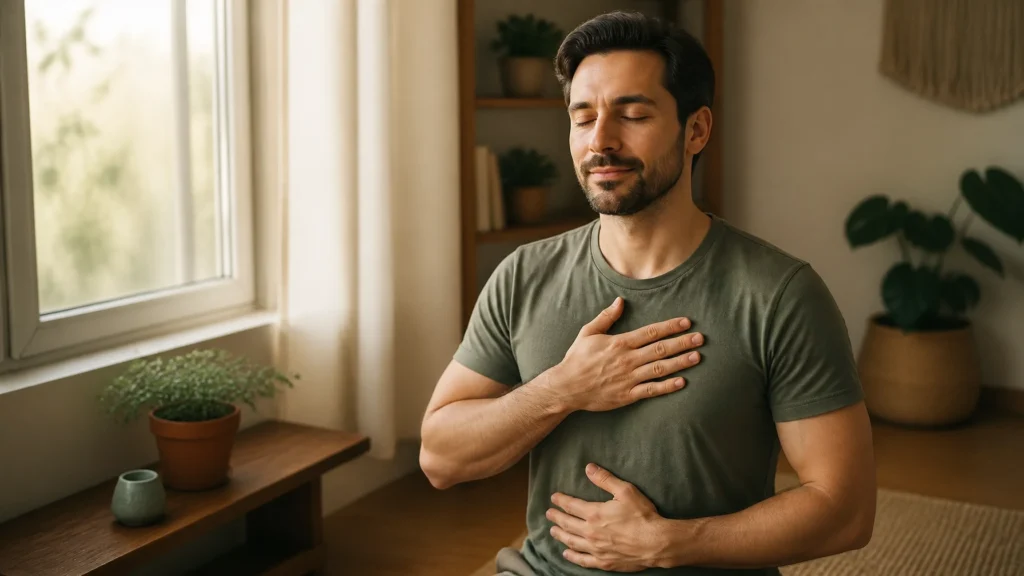
Meta description: Learn five practical steps for PIED recovery: reconnect with body sensations, reduce screen conditioning, calm performance anxiety, and rebuild intimacy confidence. If your body responds easily to intense digital stimulation but feels distant, slow, or unpredictable during real-life closeness, the problem may not be a lack of desire. Your attention and nervous system may simply have learned a very specific pattern. Fast novelty, constant visual changes, private screen habits, and pressure to perform can make subtle real-life sensations feel less noticeable. This may contribute to pied symptoms, performance anxiety, and reduced confidence with a partner. The solution is not to force a response. It is to gradually reconnect your attention with your body, real-world touch, emotional safety, and present-moment awareness. Why body connection matters during PIED recovery Your intimate response involves more than one physical system. Attention, emotions, breathing, confidence, nervous-system activity, and physical sensation all influence one another. When your attention has been trained by rapid digital novelty, you may begin monitoring yourself instead of experiencing the moment. You might wonder: Am I responding quickly enough? Will I lose firmness? Can I satisfy my partner? How do I last longer in bed naturally? What happens if my body does not cooperate? These thoughts can create a feedback loop. Worry pulls attention away from sensation. Reduced sensation creates more worry. The cycle can appear as performance anxiety erectile dysfunction, premature ejaculation anxiety, or difficulty staying present during closeness. Reconnection breaks that cycle by moving your focus from evaluation to experience. Martina Somorjai’s approach to natural potency Martina Somorjai is an Award-Winning Potencyologist® and a leading innovator in natural potency restoration and intimacy confidence. In my work, I focus on the relationship between mindset, attention, nervous-system patterns, digital conditioning, and real-life connection. The goal is not to chase a perfect performance. The goal is to help you become more aware of what your body is communicating, reduce unnecessary pressure, and build new associations through consistent practice. The five steps below are designed as a practical educational guide. 1. Notice how your attention has been trained Before changing your response, observe what currently captures your attention. Digital novelty is fast, varied, and highly controlled. You can change the image, pace, or scenario immediately. Real-life closeness is different. It includes pauses, imperfect timing, emotional vulnerability, conversation, warmth, and subtle changes in touch. If your mind expects constant intensity, ordinary sensations may initially feel too quiet. That does not automatically mean your body is damaged. It may mean your attention needs practice staying with less intense input. Try this awareness exercise For seven days, note: When you reach for stimulating digital content. What emotion appears beforehand: boredom, stress, loneliness, frustration, or restlessness. How your body feels afterward. Whether you feel more connected or more detached. What types of real-life experiences make you feel calm and present. Do not use the journal to criticise yourself. Use it to identify patterns. Also notice your everyday attention. During meals, walks, showers, or conversations, are you fully present, or are you reaching for your phone every few minutes? Rebuilding attention outside intimate situations makes it easier to stay present during closeness. 2. Rebuild body awareness through slow, present-moment touch Body awareness is the ability to notice physical information without immediately judging it. You can develop this skill through simple, non-goal-oriented practice. Begin with areas such as your hands, shoulders, chest, abdomen, back, and legs. The purpose is not to create a particular response. The purpose is to notice. A 10-minute body connection practice Sit or lie down comfortably. Take three easy breaths without forcing them. Notice the weight of your body against the chair or bed. Slowly move your attention from your face to your feet. Observe warmth, coolness, pressure, tightness, tingling, or numbness. Place a hand over your chest or abdomen and notice the movement caused by breathing. If your mind wanders, gently return to one physical sensation. You can add slow, comfortable self-touch to your arms, neck, shoulders, or chest. Keep the pace deliberately unhurried. Avoid judging whether the exercise is “working.” This practice teaches your attention that sensation does not need to be intense to be meaningful. Mindful movement can support the same process. Walk for ten minutes without checking your phone. Notice your feet, posture, breathing, temperature, and the movement of your arms. 3. Retrain your response with gradual, partnered-paced practice Real-life intimacy becomes easier to approach when it is not treated as a test. If you have experienced PIED symptoms or repeated disappointment, moving too quickly toward a performance goal can reactivate old pressure. A gradual approach gives your body time to associate closeness with safety rather than evaluation. Start with a no-pressure agreement If you have a partner, explain that you want to practise presence rather than achieve a particular outcome. Agree that either person can pause, slow down, or stop without embarrassment. Begin with simple forms of closeness: Sitting together without phones. Holding hands. Embracing for several breaths. Giving and receiving a shoulder or back massage. Noticing warmth, pressure, pace, and comfort. Taking breaks to talk or breathe. At first, keep the focus away from proving firmness, maintaining a specific level of response, or reaching a finish line. Let touch develop gradually and naturally. If your body responds, you do not need to immediately increase intensity. If your response changes, you do not need to treat it as failure. Pause, breathe, and return to a neutral form of closeness. This gradual practice can be especially useful when you are learning how to last longer in bed naturally. Control begins with awareness, not force. The earlier you notice rising tension, urgency, or mental distraction, the more options you have to slow the pace. 4. Quiet performance anxiety with grounding and breath Performance anxiety can pull your attention into the future. You stop experiencing what is happening and begin predicting what might go wrong. A grounding routine helps return your attention to the present. Use the 5-4-3-2-1 reset Quietly identify:
Q&A: 6 Myths About Natural Potency Restoration

Meta description: Learn the facts behind natural potency restoration, PIED recovery, anxiety loops, nervous-system conditioning, and how to last longer in bed naturally. Natural potency restoration is often surrounded by strong promises, quick fixes, and confusing online advice. Some claims are unsupported. Others contain a small amount of truth but leave out important context. I am Martina Somorjai, an Award-Winning Potencyologist® and leading innovator with 10 years of experience helping men understand the psychological, mental, and neurological roots of performance difficulties. In my work, I focus on sustainable change rather than temporary symptom management. This Q&A addresses six common myths about ED, PIED recovery, premature ejaculation, performance anxiety, and lasting longer naturally. Myth 1: Natural supplements can reliably restore potency Q: Can herbs and “natural” enhancement products solve performance difficulties? Fact: Most natural enhancement products do not have strong, consistent evidence behind them. Research reviews have found that popular ingredients often rely on small studies, inconsistent results, or marketing claims rather than robust clinical evidence. Some products marketed as natural may also contain undisclosed pharmaceutical ingredients, creating possible risks and interactions. This does not mean every supplement is useless. It means supplements should not be treated as a reliable solution for performance difficulties without professional guidance. The better-supported foundations include: Regular physical activity Better sleep quality Healthy blood pressure, cholesterol, and blood sugar Reduced alcohol intake Smoking cessation Stress and anxiety management Psychological support when needed A supplement may address one narrow factor, but it rarely addresses the full pattern behind a performance concern. That pattern may include stress conditioning, low confidence, relationship tension, compulsive digital habits, or fear of disappointing a partner. The practical answer: Natural does not automatically mean effective or safe. Root-cause work is more meaningful than relying on an unverified product. Myth 2: If medical tests are normal, the problem is imaginary Q: Does a normal medical checkup mean the issue is “all in your head”? Fact: Psychological causes are real biological processes. The brain controls attention, anticipation, arousal, and the body’s response to pressure. When the nervous system interprets intimacy as a threat, the stress response can become dominant. This may make it harder to maintain a firm response, even when basic medical tests appear normal. This is one reason performance anxiety and ED can become connected. One difficult experience may create fear of repetition. That fear increases self-monitoring. Self-monitoring raises tension. Tension then interferes with the body’s natural response. The issue may also involve a combination of factors. Mild physical changes can be amplified by anxiety, poor sleep, stress, or relationship conflict. A man does not have to choose between “physical” and “psychological.” Both can contribute. Common psychological factors include: Fear of failure Low self-esteem Previous negative experiences Depression or generalized anxiety Relationship tension Shame or guilt Unrealistic expectations created by explicit media In my work, I never dismiss a man’s experience as imaginary. I examine how the mind, body, nervous system, and learned habits interact. Myth 3: Performance anxiety is minor, so you should simply push through it Q: Can performance anxiety alone interfere with a firm response or timing control? Fact: Yes. Anxiety can directly activate the stress response and disrupt natural performance. A typical anxiety loop looks like this: A previous difficulty is remembered. The next intimate moment becomes a test. The brain anticipates danger or embarrassment. Breathing becomes shallow and muscles tense. Attention moves away from connection and toward monitoring. The body’s natural response becomes less reliable. The experience reinforces the original fear. Telling yourself to “just relax” rarely breaks this cycle. The nervous system needs repeated experiences of safety, not more pressure. Helpful strategies may include: Slow, controlled breathing Reducing performance goals Focusing on physical sensations instead of evaluation Communicating honestly with a partner Cognitive reframing Gradual behavioral exercises Professional support for persistent anxiety The same principle applies to premature ejaculation anxiety. Fear of losing control can increase urgency and make timing more difficult. Learning to recognize rising arousal, pause, breathe, and change intensity can gradually build awareness and control. For a practical overview, read How to Stop Performance Anxiety in the Bedroom. Myth 4: PIED means your brain is permanently damaged Q: Do PIED symptoms prove that the brain has suffered irreversible damage? Fact: Current evidence does not support the claim that PIED automatically means permanent brain damage. The relationship between adult-content use and ED is more complex than many online explanations suggest. Reviews have found associations between problematic or compulsive use and performance difficulties, but association does not prove causation. Several explanations may exist: Adult content may become linked with highly specific visual novelty. Frequent rapid switching between stimuli may shape attention and arousal habits. Anxiety about PIED may itself create a performance loop. Existing stress, isolation, depression, or relationship difficulties may contribute to both patterns. A man may use explicit media more often because he already experiences difficulty with a partner. Conditioning is changeable. The nervous system learns through repetition, and it can also learn new responses through different repetition. This is the foundation of a realistic PIED recovery approach. Helpful steps may include: Reducing or pausing explicit media Changing fast or highly pressured solo habits Rebuilding attention toward physical sensation Addressing shame without self-judgment Practicing calm, present-moment intimacy Investigating anxiety and relationship factors PIED symptoms should not be used for self-diagnosis. If difficulties are persistent, sudden, or present in every context, a qualified medical professional should assess possible physical contributors. For more detail on conditioning and digital habits, see The Brain Rewiring Guide. Myth 5: ED, premature ejaculation, and low testosterone are the same problem Q: Can one treatment solve every performance concern? Fact: These concerns can overlap, but they are not identical. ED generally refers to difficulty achieving or maintaining a firm response. Premature ejaculation involves limited control over timing and early release. Low testosterone may affect desire, mood, energy, and other body functions, but it is not automatically the main explanation for either concern. The mechanisms can differ: ED may involve blood