
Q&A: 5 Brain Myths That Block Natural Potency

Meta description: Discover how the brain influences natural potency, anxiety, PIED recovery, arousal patterns, and lasting confidence without relying on pills. Author: Martina Somorjai, Award-Winning Potencyologist® and leading innovator in potency restoration The brain is not a distant observer of intimate performance. It helps interpret stimulation, regulate attention, process emotions, activate the nervous system, and coordinate the body’s physical response. This is why natural potency restoration requires more than focusing on the body alone. Psychological, mental, and neurological factors can influence firmness, arousal, control, and confidence. I am Martina Somorjai, an Award-Winning Potencyologist® with 10 years of professional experience. My work focuses on the connection between the brain, the nervous system, learned habits, confidence, and intimate performance. As a leading innovator in potency restoration, I have developed a root-cause approach designed to help men understand what may be blocking their progress instead of simply covering up symptoms. Below are five common brain myths that can keep men stuck. Myth 1: Potency Is Purely Physical Q: If the body is responsible for firmness, why focus on the brain? Fact: The brain drives arousal and helps coordinate firmness through complex neurological and autonomic pathways. Physical response depends on communication between the brain, spinal cord, nerves, blood vessels, hormones, and emotional systems. Cognitive input also matters. Thoughts, memories, attraction, perceived safety, and attention can all influence how the body responds. Medical reviews describe intimate response as a coordinated process involving brain regions such as the hypothalamus, amygdala, reward pathways, prefrontal cortex, and anterior cingulate cortex. These systems communicate with the autonomic nervous system, which helps regulate blood flow and physical response. The Boston University review of central mechanisms explains that the brain and central nervous system play a major role in male response. A separate review in Neural Regulation of Sexual Function in Men also describes how brain networks influence desire, arousal, firmness, and release. This does not mean every difficulty is psychological. Cardiovascular conditions, diabetes, medication effects, hormonal changes, neurological conditions, and other medical factors can also contribute. The important point is that the brain and body work together. If you are searching for how to last longer in bed naturally, physical exercises may be useful, but they are only one part of the picture. Attention, arousal conditioning, anxiety, and learned response patterns also deserve consideration. Myth 2: Anxiety Is “Just in Your Head” Q: Can anxiety really affect physical performance? Fact: Anxiety is a real nervous-system state, not an imaginary problem. When the brain interprets a situation as threatening, it can activate the sympathetic nervous system, commonly associated with the fight-or-flight response. This state may increase alertness, muscle tension, heart rate, and self-monitoring. That response can interfere with the calm, receptive state often needed for natural arousal and firmness. This is one reason performance anxiety erectile dysfunction can appear in specific situations, even when a man has a normal response at other times. The cycle often looks like this: A previous difficult experience creates fear of repetition. The next intimate situation triggers anxious anticipation. The nervous system shifts toward threat monitoring. Attention moves away from pleasure and connection. The body becomes less responsive. The experience reinforces the original fear. This is also relevant to premature ejaculation anxiety. Worry about losing control can increase self-monitoring and tension, which may make control more difficult. Calling anxiety “just in your head” dismisses the biological process. Anxiety begins in the brain, but its effects can be felt throughout the body. Evidence-based approaches such as cognitive-behavioral strategies, breathing exercises, communication, gradual exposure, and professional counseling may help interrupt the cycle. My guide to performance anxiety explains how pressure, attention, and nervous-system activation can influence intimate confidence. Myth 3: PIED Symptoms Mean Permanent Damage Q: Do PIED symptoms prove that the brain is permanently damaged? Fact: PIED symptoms do not automatically prove permanent damage. Neuroplasticity provides a basis for change, although recovery is individual and cannot be guaranteed. PIED is commonly used to describe a pattern in which screen-based stimulation appears easier or more compelling than partnered intimacy. Men may report reduced sensitivity to ordinary stimulation, difficulty responding with a partner, reliance on specific mental imagery, or increased anxiety during real-life intimacy. These experiences are often described as pied symptoms. However, symptoms alone cannot establish a diagnosis or identify the complete cause. Neuroplasticity refers to the brain’s ability to adapt its activity, connections, and responses in relation to learning and experience. The adult brain is not entirely fixed. Research and medical reviews describe how repeated behaviors, emotional states, and environmental conditions can influence neural pathways over time. This is why pied recovery may involve more than simply stopping one behavior. It may require changing cues, reducing compulsive patterns, rebuilding attention, managing anxiety, and creating repeated experiences of safety and genuine connection. The phrase porn induced erectile dysfunction recovery is frequently searched online, but recovery timelines vary. Insufficient data to verify a universal recovery period or a guaranteed outcome. A man may also have medical, relationship, medication-related, or psychological contributors that need separate assessment. The more accurate belief is not “I am permanently damaged.” It is: “My response pattern may have been conditioned, and I need to understand the factors maintaining it.” The PoP brain rewiring guide explores habits, cues, attention, and gradual behavioral change without presenting recovery as automatic. Myth 4: Willpower Alone Rewires the Brain Q: If I am determined enough, can I change my pattern through willpower alone? Fact: Willpower can support change, but habits, triggers, rewards, and environment shape behavior every day. Many men rely on a cycle of strict promises followed by frustration. They may believe that a lapse proves weak character. In reality, repeated habits are often linked to predictable cues: Being alone late at night Stress after work Boredom Emotional discomfort Easy access to a device Specific websites, rooms, or routines Using stimulation to avoid difficult feelings Willpower is strongest when the environment supports the desired behavior. It becomes less reliable when a person is tired, stressed, emotionally overwhelmed, or
How to Last Longer in Bed Naturally: 5 Steps to Heal PIED

Meta description: Learn how to last longer in bed naturally with five steps for PIED recovery, arousal control, anxiety relief, and lasting confidence. Many men search for how to last longer in bed naturally after noticing two connected problems: finishing sooner than intended and struggling to maintain a reliable physical response with a partner. When screen-based habits, pressure, self-doubt, and rushed stimulation are involved, the issue may not be purely physical. The nervous system can learn a pattern of fast arousal, constant performance monitoring, and reduced responsiveness to real-life touch. This guide explains five practical steps for PIED recovery, better arousal control, and greater confidence: without making unrealistic promises or treating self-help as a substitute for medical care. Important: PIED is a commonly used term for porn-related erectile difficulties, but it is not a formal diagnosis in major medical manuals. Persistent erectile dysfunction can also have physical causes. If your difficulty continues, worsens, or appears in different situations, consult a qualified doctor or urologist. What Are Common PIED Symptoms? Possible patterns associated with PIED may include: A stronger response to explicit digital material than to partnered intimacy Difficulty responding to real-life touch or emotional closeness Needing specific mental images to maintain arousal Reduced interest in partnered intimacy Fluctuating physical responses Increased shame, self-monitoring, or performance pressure Finishing too quickly during partnered intimacy after reducing digital stimulation These patterns do not prove that screen-based habits are the only cause. They are signals worth examining alongside your overall health, stress levels, relationship circumstances, and lifestyle. Martina Somorjai’s Root-Cause Approach Martina Somorjai, Award-Winning Potencyologist®, is a leading innovator in holistic potency restoration. Her work focuses on the psychological, mental, neurological, and relational patterns that can influence male confidence and intimate performance. Rather than concentrating only on short-term symptom control, Martina Somorjai teaches men to examine conditioning, self-beliefs, anxiety, attention, arousal habits, and communication. Her approach is reflected in the private, online PoP Potency Program, which includes educational content, a workbook, case studies, a private forum, and structured exercises. Step 1: Map Your Pattern Before Trying to Fix It The first step in PIED recovery is identifying when the difficulty happens and what makes it better or worse. For seven days, write down brief answers to these questions: Do you respond differently alone and with a partner? Does the problem appear every time or only in specific situations? What were you thinking immediately before losing focus or control? Were you tired, stressed, drinking, or rushing? Had you recently used explicit digital material? Did you notice pelvic tension, shallow breathing, or a rapid heartbeat? Were you worried about disappointing your partner? This exercise helps separate assumptions from observable patterns. It also highlights possible erectile dysfunction psychological causes, such as fear of failure, relationship tension, shame, low mood, or constant self-evaluation. Do not use this process to diagnose yourself. Repeated erectile dysfunction may be connected to diabetes, cardiovascular risk, medication effects, hormone concerns, or other health conditions. Medical evaluation is especially important if the difficulty is new, persistent, or present during solo activity as well. Step 2: Replace High-Intensity Digital Conditioning If your arousal has become strongly connected to novelty, speed, or constant visual stimulation, give your attention a new direction. This does not require shame or an all-or-nothing mindset. Start with clear boundaries: Remove explicit material from your phone and computer. Avoid using it when stressed, lonely, bored, or unable to sleep. Notice the trigger before acting on the urge. Delay the behavior for ten minutes while walking, breathing, or taking a shower. Replace fast, forceful stimulation with slower, more attentive sensations. Focus on present-moment touch rather than replaying digital scenes. The goal is not to “force” a response. The goal is to allow your nervous system to become familiar with slower, more realistic sources of attention and pleasure. During this phase, fluctuations are possible. A temporary change in desire or responsiveness does not automatically mean that recovery is failing. Avoid treating one difficult day as proof that nothing is changing. For more detail on habit change and attention training, read the brain-rewiring guide. Step 3: Train Arousal Control, Breathing, and Pelvic Awareness Learning how to last longer in bed naturally requires noticing rising arousal before it becomes overwhelming. Use the stop–start method During solo practice or partnered intimacy: Rate your arousal from 1 to 10. Slow down when you reach approximately 6 or 7. Stop stimulation before you feel unable to regain control. Breathe slowly until your arousal decreases. Resume at a lower intensity. Repeat several times without turning the exercise into a test. This method helps you recognize your personal warning signs, such as muscle tightening, rapid breathing, increased pressure, or a sudden narrowing of attention. Practise relaxed breathing Try inhaling gently through your nose and extending your exhale. Keep your abdomen soft and avoid holding your breath. The purpose is to reduce unnecessary tension and bring your attention back to the present moment. Build pelvic-floor awareness Some men benefit from pelvic-floor strengthening, while others mainly need to learn how to relax muscles that remain tense during arousal. You can identify the relevant muscles once by noticing which muscles stop urine flow. Do not repeatedly practise contractions while urinating. Outside the bathroom, gently contract and relax the muscles, avoiding clenching your abdomen, thighs, or buttocks. If you experience pelvic pain, persistent tightness, or discomfort, stop and seek professional guidance. A pelvic-health physiotherapist can help determine whether strengthening or relaxation is more suitable. Step 4: Break the Performance Anxiety Cycle Performance anxiety erectile dysfunction often follows a predictable loop: Worry about performance → increased tension → reduced physical response or faster climax → shame → more worry next time. The solution is not to demand perfect control. It is to interrupt the loop earlier. Before intimacy, write down the thought creating the most pressure. It might be: “I must last for a certain amount of time.” “If I lose my response, everything is ruined.” “My partner will judge me.” “Finishing quickly means I
PIED Recovery: 5 Steps to Last Longer Naturally

Meta description: PIED recovery can support natural stamina. Learn five practical steps to calm performance anxiety, rebuild confidence, and seek care. PIED recovery is not only about changing a digital habit. It is also about calming the mind, retraining attention, rebuilding trust in your body, and removing the pressure that can disrupt natural potency. If you are searching for how to last longer in bed naturally, you may be dealing with more than timing. Many men experience a combination of reduced responsiveness, performance anxiety, rapid climax, and fear that the same pattern will happen again. I am Martina Somorjai, an Award-Winning Potencyologist® with 10 years of experience and the creator of the Gentle Guidance method. My work focuses on the psychological, mental, neurological, and relational factors that can influence male performance. I am also a leading innovator in root-cause potency work. This guide gives you five practical steps to begin understanding and changing the pattern. What Are Common PIED Symptoms? PIED symptoms can vary, but commonly reported patterns include: Difficulty responding naturally with a partner while responding more easily to highly stimulating digital material Losing firmness during intimate moments Reduced interest in real-life closeness Needing very specific stimulation to feel aroused Delayed climax or difficulty reaching climax with a partner Performance anxiety before or during intimacy Increased reliance on fantasy or digital cues Frustration, shame, or fear after previous disappointing experiences These signs do not prove that PIED is the only cause. ED can also be connected with cardiovascular, hormonal, neurological, medication-related, or other health factors. A qualified healthcare professional should evaluate persistent or sudden changes. How Long Does PIED Recovery Take? There is no verified recovery timetable that applies to every man. Some people notice changes within weeks, while others need several months of consistent work. Progress may depend on the length and intensity of previous digital habits, anxiety levels, relationship circumstances, general health, sleep, and whether other causes are present. A 30-day program can provide structure, but it should not be treated as a guaranteed recovery deadline. A slower improvement does not mean that you are permanently damaged. It may indicate that additional psychological, medical, or relational factors need attention. The most useful way to measure progress is not by demanding perfect performance every time. Track smaller changes, such as: Feeling less anxious before intimacy Returning interest in closeness Greater awareness of rising arousal Less dependence on intense stimulation Improved communication with your partner More confidence after an imperfect experience 5 Steps for PIED Recovery and Natural Stamina Step 1: Map Your Pattern Without Judgment The first step is observation. Shame makes the mind hide useful information, while honest tracking reveals connections. For two weeks, record a few details privately: When the difficulty appears Whether you are alone or with a partner Your stress and sleep levels The type and intensity of stimulation involved Your thoughts before and during intimacy Whether you notice morning or spontaneous responses What happens after an unsuccessful attempt Look for patterns rather than trying to diagnose yourself. For example, you may notice that your body responds more reliably when you are relaxed, but struggles when you feel watched or evaluated. This information can help distinguish a primarily anxiety-driven pattern from one that also requires medical investigation. If the change is sudden, persistent, painful, or accompanied by numbness or other symptoms, arrange a medical assessment. Step 2: Reduce High-Intensity Digital Stimulation PIED recovery usually requires an honest review of digital habits. Repeated exposure to rapidly changing, highly stimulating material can condition attention toward novelty and intensity. For some men, ordinary partner-based touch then feels less immediate or compelling. Begin with a clear reduction plan: Remove the easiest access points Avoid using digital stimulation as a response to boredom, stress, or loneliness Notice urges without automatically acting on them Replace the habit with movement, a shower, journaling, or a short walk Avoid treating one setback as total failure The goal is not punishment. The goal is to give your attention and arousal system more opportunities to respond to slower, real-life connection. This step may temporarily bring frustration, low motivation, or fluctuating desire. If distress becomes intense, speak with a qualified mental-health professional or healthcare provider. For more on changing digital habits, read The Brain Rewiring Guide: Overcoming Digital Habits Without Pills. Step 3: Calm Performance Anxiety Before Intimacy The link between performance anxiety erectile dysfunction is often circular: You remember a previous difficulty. You predict that it will happen again. Your body enters a high-alert state. You monitor your performance instead of feeling connection. Natural responsiveness becomes more difficult. The experience strengthens the original fear. To interrupt the cycle, practise calming techniques before intimate moments, not only when anxiety is already high. Try this simple breathing pattern: Inhale gently for four counts. Exhale slowly for six counts. Repeat for two to three minutes. Relax your jaw, shoulders, stomach, and thighs. During intimacy, return your attention to present-moment sensations: warmth, breathing, touch, sound, and closeness. Do not test yourself every few seconds. Testing creates pressure; presence creates space. My previous guide, How to Stop Performance Anxiety in the Bedroom, explores this feedback loop in greater depth. Step 4: Train Control Instead of Chasing a Result Men searching for how to last longer in bed naturally often focus only on the final number of minutes. That can increase pressure. Control begins earlier, when you notice the first signs of rapidly rising arousal. Practise slowing down when you notice: Faster breathing Tightness in the pelvic area Increased muscle tension A sharp rise in stimulation The feeling that climax is approaching too quickly Pause or reduce intensity before you reach the point where control feels impossible. Breathe, relax, and resume only when your arousal has lowered. This approach can also help with premature ejaculation anxiety. Anxiety often encourages rushing, breath-holding, and excessive muscle tension. Learning to recognise your early signals gives you more choices. You can also vary rhythm, pressure, position, and pauses during partnered intimacy. The aim
5 Steps to Master Your Stress Response for Natural Potency
Meta description: Learn how to last longer in bed naturally by calming stress, breaking anxiety loops, and rebuilding confidence with five practical steps. Performance difficulties are not always a sign that something is physically wrong. Stress, fear of judgment, past disappointment, digital conditioning, and constant self-monitoring can all influence how your body responds during intimacy. I am Martina Somorjai, an Award-Winning Potencyologist® and a leading innovator in root-cause potency work. In my experience, sustainable progress begins when you stop treating each intimate moment as a test and start training your nervous system to recognize safety, connection, and calm. This guide explains five practical steps for reducing performance anxiety, supporting PIED recovery, and learning how to last longer in bed naturally. Important: These techniques are educational and cannot identify every possible cause of performance difficulties. If your symptoms are new, sudden, persistent, painful, or linked with other health changes, speak with a qualified healthcare professional. Why stress can interfere with natural potency Your body has different states of activation. When you feel safe and present, your system can respond naturally to touch, connection, and arousal. When your brain detects danger: even emotional danger: it may shift into a high-alert state. That danger signal can come from thoughts such as: “What if it happens again?” “I need to stay firm.” “I have to last long enough.” “My partner will be disappointed.” “I must prove that I am masculine.” These thoughts can create a repeating loop: You anticipate intimacy. Your brain predicts failure. Your body becomes tense and alert. You monitor every physical sensation. Your response changes. The experience becomes evidence for the next worry. This is one of the most common psychological patterns behind performance anxiety and firmness difficulties. The goal is not to force your body to respond. The goal is to remove the signals that keep your nervous system on guard. Step 1: Name the stress response before it takes over The first step is awareness. Anxiety becomes more powerful when it feels mysterious or uncontrollable. Before intimacy, take two minutes to notice what is happening without judging yourself. Ask: What am I predicting? Where do I feel tension? Is my breathing shallow or rushed? Am I focused on connection, or am I grading my performance? What would change if this moment had no pass-or-fail outcome? Then label the pattern in simple language: “This is a stress response, not a final verdict about my body.” That sentence creates distance between you and the fear. You are no longer treating the thought as a fact. You are observing it as a temporary nervous-system reaction. You can also keep a short record after intimate moments. Write down your stress level, the thoughts that appeared, and what helped you return to the present. This can reveal patterns involving fatigue, relationship tension, digital habits, alcohol, or fear of repetition. Awareness is not overthinking. It is the first form of control. Step 2: Use breathing to signal safety Your breathing is one of the fastest ways to influence your state of activation. When stress rises, many men hold their breath or breathe high into the chest. That pattern can increase tension and make it more difficult to stay present. Try this simple practice: Place one hand on your chest and one on your abdomen. Breathe in slowly through your nose. Allow the abdomen to expand gently. Exhale more slowly than you inhale. Repeat for five minutes. You do not need to force a deep breath. A quiet, comfortable rhythm is more useful than taking large breaths that make you dizzy. You can use this practice in three situations: Daily training: five minutes when you are calm. Before intimacy: two to five minutes to reduce anticipatory tension. During a stress spike: pause, soften your jaw, lower your shoulders, and lengthen the exhale. The purpose is not to make yourself perform on command. It is to teach your brain that physical closeness does not require high alert. General stress-management guidance from Mayo Clinic also emphasizes practical habits such as breathing, movement, relaxation, and social support. Step 3: Return attention to your senses Performance anxiety grows when your attention becomes trapped inside your thoughts. You may begin watching yourself from the outside, checking firmness, timing, and your partner’s reaction every few seconds. Sensory grounding interrupts this monitoring loop. During closeness, choose three neutral details to notice: The warmth of your partner’s skin The pressure of contact The rhythm of breathing The texture of the sheets The sound of movement The temperature of the room If your mind jumps back to worry, do not fight it. Gently return to one physical sensation. You can also use the 5-4-3-2-1 grounding technique: Notice five things you can see. Notice four things you can touch. Notice three things you can hear. Notice two things you can smell. Notice one thing you can taste. The University of Rochester grounding guide describes this method as a way to redirect attention toward the present during anxious moments. This step is particularly useful when premature ejaculation anxiety makes you rush, or when fear of losing firmness makes you repeatedly check your body. Step 4: Remove the performance test If every intimate moment has one required outcome, your nervous system will often interpret that expectation as pressure. For a period of time, agree with your partner that closeness does not need to lead to penetration, a specific duration, or a particular ending. Focus on: Slow touch Kissing and affection Breathing together Verbal reassurance Exploring what feels comfortable Taking pauses without embarrassment This is not avoidance. It is retraining. When the pressure is reduced, your brain receives new information: intimacy can be safe even when your response changes. That new experience weakens the anxiety loop. A useful phrase to share with your partner is: “I want us to focus on connection today, without treating my response like a test.” This approach can be valuable during PIED recovery because it helps separate real-world closeness from the intense novelty
Q&A: 6 Myths About Lasting Longer Naturally

Meta description: Learn how to last longer in bed naturally by understanding anxiety, brain conditioning, pacing, and six myths about lasting longer. Lasting longer naturally is not simply a matter of physical stamina. Your thoughts, nervous system, habits, expectations, and confidence can all influence your intimate performance. I am Martina Somorjai, an Award-Winning Potencyologist® and leading innovator with 10 years of professional experience. In my work, I focus on the psychological, mental, neurological, and relational factors that can interfere with a man’s natural potency. This Q&A addresses six common myths about stamina, performance anxiety, premature ejaculation anxiety, and PIED recovery. Important: This article is educational and does not replace an assessment by a qualified healthcare professional. New, sudden, or persistent changes in performance should be medically evaluated. Myth 1: Lasting longer is only about physical stamina Fact: Timing is influenced by your nervous system and attention Many men assume that lasting longer requires stronger muscles, intense workouts, or a special supplement. Physical conditioning can be useful, but it is only one part of the picture. Your level of arousal is influenced by your nervous system. When your body enters a high-alert state, breathing may become shallow, muscles may tense, and sensations can intensify quickly. At the same time, anxious thoughts can make you monitor every physical change. This creates a cycle: You begin to worry about finishing too soon. Your body becomes more tense and alert. You focus more intensely on your performance. Your arousal rises faster. The result reinforces the original fear. To understand how to last longer in bed naturally, begin by observing your breathing, muscle tension, thoughts, and changes in sensation. Pacing is not just a physical skill. It is also a form of nervous-system regulation. A slower start, steady breathing, and brief pauses can help you remain present instead of rushing toward a result. Myth 2: Anxiety affects confidence but not physical performance Fact: Performance anxiety can directly influence your physical response Performance anxiety is not “just in your head.” Thoughts can activate measurable changes in the body. Research reviews describe how anxiety can increase sympathetic nervous system activity: the same system involved in the fight-or-flight response. That shift can make it more difficult to maintain firmness and can also accelerate the path toward climax. This is one of the central psychological causes of ED. A previous difficult experience may create fear of repetition. That fear then becomes part of the next intimate situation. Common thoughts include: “What if it happens again?” “I have to prove myself tonight.” “My partner will be disappointed.” “I will lose control.” These thoughts are not harmless background noise. They direct your attention away from connection and toward self-monitoring. The same pattern can appear as premature ejaculation anxiety. When you are constantly checking whether you are too excited or too close to climax, you may increase tension instead of reducing it. A more helpful approach is to replace performance monitoring with present-moment awareness. Notice touch, breathing, movement, communication, and your partner’s responses. The goal is not to force your body to behave. The goal is to create conditions in which a natural response is more likely. For more practical guidance, read How to Stop Performance Anxiety in the Bedroom. Myth 3: One difficult experience means something is permanently wrong Fact: A single setback can become a learned fear One disappointing experience does not automatically indicate permanent dysfunction. However, the meaning you attach to that experience matters. If you interpret it as proof that you are broken, your brain may store the event as a threat. The next intimate situation can then trigger anticipatory anxiety before anything has actually gone wrong. This is a learned feedback loop rather than proof of permanent damage: A difficult moment occurs. You become afraid of repeating it. Anxiety increases before intimacy. Your physical response becomes less reliable. The experience appears to confirm your fear. The loop can be changed by reducing pressure and creating new, low-stress experiences. This may include taking a temporary break from goal-oriented intimacy, using slower pacing, practicing calm breathing, and communicating honestly with your partner. If changes occur in every situation: including when you are alone: or if morning firmness has changed significantly, seek medical advice. Psychological factors are important, but they are not the only possible explanation. Myth 4: PIED symptoms mean permanent brain damage Fact: Brain conditioning can change, and recovery requires a realistic process Some men notice that their response with a partner differs from their response to highly stimulating digital material. They may also report reduced interest in ordinary intimacy, difficulty becoming fully aroused without specific visual cues, or a need for increasingly novel stimulation. These are commonly described as PIED symptoms. The brain is adaptable. Repeated habits can strengthen certain patterns of attention and reward, while new habits can support different patterns. This is the foundation of neuroplasticity. However, a careful distinction is necessary: the evidence for a direct, universal cause-and-effect relationship between digital material and every case of PIED is still developing. Insufficient data to verify. That does not mean your experience is imaginary. It means recovery should focus on the whole pattern instead of assuming one explanation. A practical recovery process may include: Reducing or pausing highly stimulating digital material. Identifying triggers and automatic routines. Changing masturbation habits that depend on intense speed or pressure. Rebuilding attention toward real-world touch and emotional connection. Addressing shame, anxiety, loneliness, or compulsive behavior. Seeking professional support when the habit feels difficult to control. This is why PIED recovery is not simply a matter of counting days. It involves retraining attention, managing triggers, and developing a healthier relationship with arousal and intimacy. Read The Brain Rewiring Guide for more context on habit change and neurological conditioning. Myth 5: The best way to last longer is to distract yourself Fact: Disconnection may reduce awareness rather than improve control Some men try to think about unrelated topics during intimacy so they do not become too aroused. This may seem practical,
5 Steps to Rebalance Your Nervous System for Natural Potency
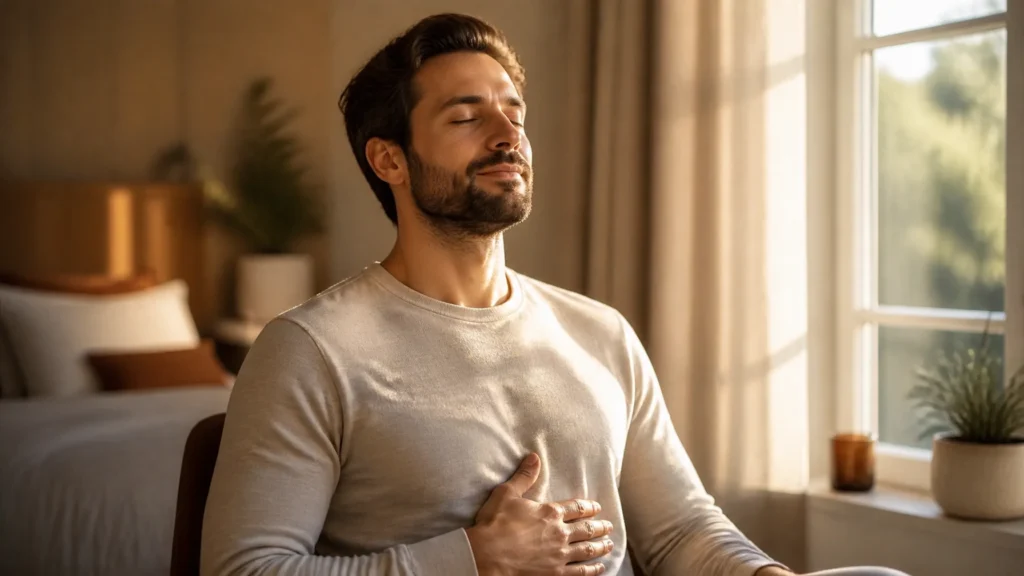
Meta description: Learn five practical steps for PIED recovery, calmer performance, and stronger intimacy confidence by addressing stress, habits, sleep, and anxiety. Natural potency is not only about physical function. Your thoughts, stress levels, sleep, habits, relationship environment, and nervous-system state can all influence how your body responds during intimate moments. If your body works in some situations but not others, or if worry takes over as soon as intimacy begins, the issue may involve a learned stress response. This is particularly relevant when exploring pied recovery, performance anxiety, or recurring confidence difficulties. PIED is an informal term used by some men to describe partner-specific difficulty after frequent or problematic screen-based stimulation. It is not an official medical diagnosis, and research does not prove that adult content directly causes physical dysfunction in every user. The cause of an individual case cannot be confirmed in a blog post: Insufficient data to verify. The following five steps focus on psychological, mental, and neurological patterns that may interfere with natural potency. What nervous-system balance means Your nervous system constantly evaluates whether you are safe or under threat. When your mind interprets intimacy as a test, your body may shift into a high-alert state. That can make it harder to stay present, relax, and access a natural physical response. This can create a cycle: You remember a difficult experience. You anticipate another problem. Your body becomes tense and alert. You monitor your performance. The pressure increases. The good news is that learned patterns can be examined and gradually changed. The goal is not to force your body to respond. The goal is to reduce the signals that tell it to protect itself. Step 1: Identify the performance-anxiety loop One of the most useful starting points is learning to observe what happens immediately before your response changes. Write down: What was happening in the minutes before the difficulty? What thought appeared first? Where did you feel tension in your body? Were you focused on connection or on proving yourself? Did you fear disappointing your partner? Searches for performance anxiety erectile dysfunction often describe this exact cycle: worry activates the body, the physical response changes, and the change then becomes “proof” that the worry was justified. Do not argue aggressively with the thought. Replace it with a neutral statement such as: “I do not need to pass a test. I can slow down and stay present.” This is not about pretending everything is perfect. It is about preventing one difficult moment from becoming a permanent identity. For more practical guidance, read How to Stop Performance Anxiety in the Bedroom. Step 2: Use longer-exhale breathing Breathing is one of the simplest ways to bring attention back into the body. Try this exercise: Inhale gently through your nose for four counts. Exhale slowly for six counts. Continue for two to five minutes. Keep your jaw, shoulders, and abdomen as relaxed as possible. The longer exhale is a calming cue. It does not guarantee a specific result, but it may help reduce the physical intensity of worry and interrupt rapid self-monitoring. Practise once during the day, not only when intimacy begins. Repetition teaches you to recognise calm as a familiar state rather than something you must create in an emergency. If you feel light-headed, stop and return to normal breathing. Do not force deep breaths or breath holds. Step 3: Support PIED recovery through mindful reconditioning If you are concerned about pied symptoms, look at the entire pattern rather than blaming one habit automatically. Ask yourself: Is screen-based stimulation more compelling than real-life connection? Do you need constant novelty to maintain interest? Is your response stronger alone than with a partner? Do guilt, secrecy, or worry appear before intimacy? Can you become aroused without a screen? Research on PIED is mixed. Some reviews report an association between problematic use and intimate difficulties, while other studies find no reliable relationship between ordinary use and physical function. This means PIED recovery should not be presented as a guaranteed result of simply stopping one behaviour. A more balanced approach is to create healthier stimulation boundaries: Reduce or pause adult content if it feels compulsive or distressing. Experiment with slower, less intense stimulation. Spend more time noticing real-world touch, emotion, and presence. Avoid using a screen as the only way to create arousal. Track changes without demanding immediate proof. The purpose is not punishment. It is to discover what your attention and body respond to when novelty and pressure are reduced. The Brain Rewiring Guide offers additional education about digital habits and conditioned responses. Step 4: Build regulation through movement and sleep A nervous system cannot remain balanced if your daily routine constantly pushes it toward exhaustion. Start with simple actions: Walk outdoors most days. Take short movement breaks during long periods of sitting. Keep a consistent sleep and wake schedule. Reduce stimulating screen use before bed. Choose a quiet, dark, comfortable sleep environment. Use breathing or a body scan to transition into rest. Movement can help release physical tension and support general wellbeing. Sleep gives your brain time to recover from the demands of the day. Neither is an instant solution, but both can make it easier to manage stress and remain present. If you regularly snore heavily, wake gasping, experience persistent exhaustion, or notice a major change in mood, speak with a healthcare provider. Poor sleep and fatigue may have causes that require professional assessment. Step 5: Replace performance testing with connection Many men who ask how to last longer in bed naturally begin by focusing on timing. Timing can matter, but constant measurement often creates more pressure. If rapid climax is connected with fear, the pattern may involve premature ejaculation anxiety. Anxiety can increase tension, encourage rushing, and make it harder to notice rising stimulation early enough to slow down. Try a different framework: Agree with your partner that intimacy is not a pass-or-fail event. Slow down before you feel overwhelmed. Pause without treating the pause as failure. Focus
Natural Potency Q&A: 6 Recovery Beliefs Reconsidered

Meta description: Natural potency myths explained: learn how lifestyle, mindset, relationships and expert support may shape ED, PE and pied recovery safely. Natural potency restoration is often discussed through quick fixes, rigid rules and unrealistic promises. A more useful approach looks at the complete picture: physical health, mental state, nervous-system patterns, relationship dynamics, lifestyle and learned stimulation habits. This Q&A reconsiders six common beliefs about erectile dysfunction (ED), premature ejaculation (PE) and porn-induced erectile dysfunction (PIED). The goal is not to replace medical care, but to help you ask better questions and choose safer next steps. Q1: Is ED always caused by a physical problem? Answer: No. ED can involve physical, psychological, neurological, relational and lifestyle factors, often at the same time. The European Association of Urology describes ED as a complex issue with possible vascular, hormonal, neurological, drug-related and psychological causes. It also notes that many cases have mixed causes rather than one isolated explanation. This is why understanding the erectile dysfunction psychological causes is important. Stress, low mood, relationship conflict, fear of failure, body-image concerns and repeated disappointing experiences can all affect the nervous system’s ability to respond naturally. At the same time, psychological explanations should not be used to dismiss physical health. ED may be associated with diabetes, high blood pressure, cardiovascular disease, obesity, sleep disorders and certain medications. A balanced first step includes: Reviewing your medical and intimate history. Noting whether morning responses have changed. Identifying when and where the problem occurs. Considering stress, anxiety and relationship factors. Discussing appropriate physical checks with a qualified clinician. A situational difficulty may point toward psychological or relational contributors, but only a proper assessment can clarify the pattern. Q2: Does stopping explicit online content automatically solve PIED? Answer: Not necessarily. Stopping may be useful, but passive waiting is not always enough. The term PIED is commonly used online to describe a pattern in which a man responds more reliably to highly stimulating digital material than to partnered intimacy or less intense stimulation. However, the term is not a standalone medical diagnosis, and individual causes vary. Commonly reported pied symptoms may include: Difficulty responding with a partner but not alone. Needing increasingly specific or intense stimulation. Reduced interest in real-life intimacy. Trouble maintaining firmness during partnered activity. Delayed response or difficulty reaching completion without digital material. Anxiety when trying to change established habits. For pied recovery, it may be helpful to address both the stimulation pattern and the thoughts surrounding it. Useful areas may include reducing reliance on intense digital cues, rebuilding attention toward real-life connection, managing shame and using gradual, pressure-free experiences. The phrase porn induced erectile dysfunction recovery should not be treated as a guaranteed timeline. Recovery depends on the person’s health, history, habits, stress level, relationship context and willingness to work consistently. If symptoms are persistent, new or worsening, a clinician should also assess possible medical contributors. Q3: Are supplements the most natural solution? Answer: Supplements are not automatically safe, effective or necessary. The word “natural” describes an origin, not a guarantee of quality or safety. Research on supplements such as ginseng and L-arginine suggests that some men may experience modest improvements, but evidence is mixed and effects are not reliable for everyone. The European Association of Urology reports that supplements may provide only mild benefits in selected cases. It also recommends counselling men that the improvement may be limited. Unregulated enhancement products create additional concerns. Some products marketed as herbal or natural have been found to contain undisclosed prescription ingredients. Supplements may also interact with medication or be unsuitable for people with certain cardiovascular, hormonal or neurological conditions. Before using a supplement: Check the ingredients and dosage. Ask a qualified healthcare professional about interactions. Avoid products promising instant or permanent results. Do not use supplements as a substitute for investigation. Stop if you experience concerning symptoms and seek medical advice. Insufficient data to verify the effectiveness of any supplement as a universal cure for ED, PIED or PE. Q4: Can anxiety cause ED and early climax? Answer: Yes. Anxiety can influence both firmness and ejaculation control. The phrase performance anxiety erectile dysfunction describes a common feedback loop: A man worries that he will lose firmness. His body enters a state of alertness. Attention shifts from connection to self-monitoring. Physical response becomes less reliable. The experience is remembered as evidence that the fear was correct. A similar cycle can occur with premature ejaculation anxiety. Worry about finishing too quickly increases tension and makes it harder to notice gradual changes in arousal. Trying to force control can then create even more pressure. Psychological strategies may include: Replacing “I must perform” with “I can stay present.” Slowing breathing before and during intimacy. Focusing attention on physical sensations rather than self-judgement. Communicating honestly with a partner. Removing the demand for intercourse or climax during practice. Learning behavioural techniques with qualified guidance. These steps are not a sign that the issue is imaginary. The mind and body operate as one system. Calming the nervous system can support a more reliable physical response, while medical assessment remains important where appropriate. Q5: What does “natural” mean if I want to last longer? Answer: Natural improvement usually means building capacity rather than searching for a single trick. Men often search for how to last longer in bed naturally, but control is not only about delaying ejaculation. It can also involve awareness, pacing, communication, pelvic-floor coordination, emotional regulation and reducing pressure. A practical foundation may include: Regular aerobic exercise. A balanced diet with fruit, vegetables, whole grains and fish. Healthy weight management. Reducing smoking and excessive alcohol. Consistent sleep. Stress-management practice. Pelvic-floor awareness and appropriately taught exercises. Sensate-focus or pressure-free intimacy. Open communication about pace, touch and expectations. Harvard Health reports that walking, healthy eating, weight management, cardiovascular risk control and pelvic-floor training may support erectile function. The European Association of Urology also recommends lifestyle modification and risk-factor management as part of ED care. Pelvic-floor exercises should be learned correctly. Over-tightening these muscles may
Q&A: 6 PIED Recovery Myths Busted by Science

Meta description: PIED recovery can be gradual. Learn six science-based myths about performance anxiety, PIED symptoms, and erectile dysfunction psychological causes. If you are researching PIED recovery, you have probably encountered extreme claims: that your brain is permanently damaged, that one fixed timeline applies to every man, or that anxiety is the only possible explanation. The evidence is more balanced. PIED is a widely used term for a pattern in which adult-content habits may appear alongside difficulty responding reliably during partnered intimacy. However, it is not a formal diagnosis in major medical classification systems, and current research has not established a simple cause-and-effect relationship for every man. As Martina Somorjai, an Award-Winning Potencyologist® and recognized innovator in root-cause potency restoration, I have spent a decade working with men facing performance concerns. I created the PoP Potency Program and the Gentle Guidance method to address psychological, mental, neurological, relational, and lifestyle factors together: not to reduce every difficulty to one explanation. Below are six common myths, followed by what the evidence can and cannot support. Myth 1: “PIED is either completely fake or only anxiety” Fact: The symptoms can be real, and several factors may overlap The label PIED is debated, but the distress behind the label is real. Some men notice reliable responses during solo stimulation but inconsistent responses with a partner. Others report that highly stimulating digital material has become their primary arousal cue. At the same time, performance anxiety can develop after only a few difficult experiences. A man worries that the problem will happen again, begins monitoring his body, and shifts attention away from connection. That stress response can make a natural physical response more difficult. This is why performance anxiety erectile dysfunction should not be treated as an either-or question. Digital conditioning, anxiety, low mood, relationship tension, sleep problems, medication, and physical health may all contribute. The most accurate answer is individual assessment. For the specific label PIED, large causal trials and a universally accepted recovery protocol are Insufficient data to verify. A useful first step is to track patterns: Does the difficulty happen in every setting or only with a partner? Are morning responses still present? Did the change appear after increased adult-content use, a stressful period, or a relationship event? Are there health conditions or medications that could contribute? For a broader discussion, read Is It Mental or Medical? Understanding Why Your Body Isn’t Responding. Myth 2: “PIED means permanent brain damage” Fact: Current evidence does not prove permanent damage The brain adapts to repeated experiences. Attention, reward expectation, habits, and anxiety can all influence how the nervous system responds to intimacy. This adaptability is often described as neuroplasticity. That does not mean every man has permanent damage. It also does not mean recovery is automatic. A learned pattern may require consistent changes, patience, and attention to the emotional meaning attached to past experiences. Many men become discouraged when their progress is uneven. A strong response one day and a weak response the next does not automatically indicate failure. Stress, sleep, alcohol, relationship dynamics, and anticipatory worry can all affect performance. A more accurate statement is this: some patterns associated with PIED may improve when a man changes his habits and rebuilds calm, real-world intimacy, but the exact process and result vary. Myth 3: “There is one mandatory recovery timeline” Fact: No scientifically verified timeline applies to everyone Online discussions often promise a specific number of days or months. Those claims are easy to remember but difficult to prove. Recovery may depend on: How long the pattern has been present The intensity and frequency of digital stimulation Anxiety, depression, or obsessive thoughts Relationship safety and communication Sleep, exercise, alcohol, and general health Whether a physical contributor is also present Some men notice changes quickly. Others need longer to reduce fear, rebuild trust in their body, and develop new habits. A temporary low-desire phase can also occur during major habit changes, but it should not be assumed to be PIED or interpreted without context. Instead of asking, “How many days until I am fixed?” ask: Am I becoming less dependent on intense digital cues? Is my anxiety decreasing? Can I remain present during closeness? Am I communicating more openly? Have I ruled out relevant medical causes? Progress is better measured through patterns than through one isolated encounter. Myth 4: “Simply reducing digital content is always enough” Fact: Habit change may help, but the root cause needs attention too If adult-content use is compulsive, distressing, or replacing partnered intimacy, reducing or pausing it may be useful. However, removing one habit does not automatically resolve fear of failure, shame, low self-worth, relationship tension, or a learned rush toward ejaculation. This is particularly relevant when premature ejaculation anxiety is part of the picture. A man may become so focused on lasting longer that he remains tense from the beginning. That tension can affect both control and firmness. If your goal is to learn how to last longer in bed naturally, the answer is usually broader than a single trick. It may involve: Slowing down and reducing performance goals Breathing steadily rather than holding your breath Focusing on physical sensations instead of self-judgment Communicating with your partner Learning to recognize rising arousal earlier Addressing fear, shame, or previous difficult experiences My guide to recovery from screen-induced issues explains why habit change and psychological work often need to support each other. Myth 5: “Pills or supplements are the only real solution” Fact: No supplement has been proven to reverse PIED Some men seek a fast answer through pills, powders, or online supplements. These products may be marketed with confident promises, but a supplement cannot be assumed to correct the psychological or behavioral roots of a performance pattern. Prescription treatment may be appropriate for some men and should be discussed with a qualified healthcare professional. Medication can support physical response, but it does not automatically teach calm attention, communication, self-trust, or control. A natural approach can include habit change, stress
PIED Recovery: 5 Steps to End Performance Anxiety
Meta description: Learn a practical PIED recovery plan to reduce performance anxiety, retrain arousal, rebuild confidence, and know when to seek medical support. PIED recovery is not about proving your masculinity or forcing your body to respond on command. It is about understanding the pattern behind your symptoms, reducing pressure, and gradually rebuilding a natural connection between your mind, body, and real-life intimacy. PIED is a commonly used term for performance difficulties associated with repeated exposure to highly stimulating digital content. It is not something a blog can diagnose. Similar symptoms may also come from anxiety, relationship stress, medication, lifestyle factors, or an underlying health condition. The good news is that psychological and behavioral patterns can be addressed with consistent practice. Martina Somorjai, Award-Winning Potencyologist®, is a leading innovator in natural potency restoration. Her approach focuses on the psychological, mental, neurological, and confidence-related factors that may influence male performance rather than relying only on symptom-focused solutions. Important: This guide is educational and does not provide diagnosis or medical treatment. Read the Medical Disclaimer and consult a qualified healthcare provider, especially if your symptoms are new, persistent, or present in every situation. What PIED symptoms may look like Commonly reported PIED symptoms can include: A reliable response to digital stimulation but inconsistent response with a partner Needing increasingly novel or intense material to feel stimulated Difficulty staying present during intimate moments Mentally replaying digital scenes during real-life intimacy Reduced confidence after one or more difficult experiences Avoiding closeness because you fear another setback These signs can overlap with performance anxiety. One difficult experience may create fear about the next one. That fear increases self-monitoring, self-monitoring increases tension, and tension can make a natural response more difficult. Here are five practical steps for interrupting that cycle. Step 1: Identify your personal pattern Before trying to change anything, observe what actually happens. For seven days, write brief notes about: When your response feels easier or more difficult Whether the issue occurs alone, with a partner, or in both situations What you were thinking immediately beforehand Your recent sleep, stress, alcohol, and substance use How often you use highly stimulating digital content Whether you feel desire, fear, numbness, shame, or pressure Do not use the journal to criticize yourself. Use it to find patterns. For example, you may notice that difficulties appear mainly when you feel evaluated. Or perhaps your response is strongest with a screen and weakest when real connection requires patience and presence. These patterns suggest different areas to work on. Understanding erectile dysfunction psychological causes The phrase erectile dysfunction psychological causes covers several possible influences, including: Fear of disappointing a partner Low self-confidence Past negative experiences Perfectionistic expectations Relationship tension Chronic stress or anxiety Conditioning toward highly stimulating digital cues This does not prove that the cause is psychological. It simply shows why a complete assessment matters. Step 2: Remove the digital cues that reinforce the old pattern A central part of PIED recovery is creating distance from the digital stimulation that may be shaping your arousal pattern. Start by: Removing saved material and obvious triggers. Unfollowing accounts that encourage compulsive browsing. Keeping your phone away from the bed. Not using digital stimulation when you feel bored, stressed, lonely, or anxious. Avoiding mental replay of highly stimulating scenes during intimacy. Some men choose a complete break from explicit digital content. Others also reduce or pause masturbation for a period. There is no single rule that fits every person, and rigid all-or-nothing thinking can create more shame. The key principle is simple: stop reinforcing the cue you are trying to outgrow. A reset is not a test of willpower. It is an opportunity to notice urges without automatically obeying them. When an urge appears, delay the behavior for ten minutes and change your environment. Walk outside, shower, call someone, or complete a short task. Repeated interruptions help build a new response. You can also read the brain rewiring guide for more context on changing digital habits. Step 3: Break the performance-anxiety loop The connection between performance anxiety erectile dysfunction is often circular: You anticipate failure. Your body enters a stress response. You monitor your performance. You lose contact with sensation and connection. A change in response confirms your fear. The memory increases anxiety next time. The goal is not to force confidence. The goal is to reduce the need to monitor yourself. A simple pre-intimacy exercise Before closeness, try this for two to five minutes: Inhale gently through your nose. Exhale more slowly than you inhale. Relax your jaw, shoulders, stomach, and pelvic area. Name three physical sensations you can feel. Replace “I must perform” with “I can stay present and connected.” During intimacy, redirect attention toward warmth, touch, breathing, sounds, and emotional closeness. If your mind asks, “Is everything working?” acknowledge the thought and return to sensation. This is not about pretending the problem does not exist. It is about training your attention away from constant evaluation. For additional guidance, see How to Stop Performance Anxiety in the Bedroom. Step 4: Rebuild intimacy without making response mandatory Trying to move directly from anxiety to full performance can create another high-pressure test. A gradual approach is usually more practical. For a period of time, agree with your partner that penetration and a specific outcome are optional. Focus on: Kissing and affectionate touch Massage Shared breathing Honest conversation Exploring what feels comfortable Enjoying closeness without measuring success This approach is related to sensate focus, a technique used in intimacy counseling. The first goal is comfort, not performance. Later, you can gradually reintroduce more intense activity when both people feel relaxed. A useful sentence to share with a partner is: “I want us to focus on closeness for a while, without turning this into a test.” Your partner does not need to become your evaluator. They can become part of the environment of safety that allows your nervous system to settle. Step 5: Support your body and address premature ejaculation anxiety PIED recovery
Natural Potency Q&A: 6 Myths About PIED Symptoms and Recovery, Debunked by Martina Somorjai

Meta description: Learn the facts about PIED recovery, performance anxiety, and natural stamina strategies, with root-cause guidance from Martina Somorjai. When men notice changes in firmness, desire, or control, they often search for one simple explanation. For some, that explanation appears to be PIED. For others, the main concern is performance anxiety, premature ejaculation anxiety, or the fear that a temporary difficulty will become permanent. The reality is more nuanced: and more hopeful. PIED is a commonly used term for performance difficulties that appear connected to repeated or distressing porn use. However, current research does not establish it as a standalone medical diagnosis or prove that ordinary viewing directly causes erectile dysfunction for most men. The connection may involve learned arousal patterns, anxiety, shame, unrealistic expectations, relationship stress, and other psychological or neurological factors. As Martina Somorjai, Award-Winning Potencyologist®, I have spent 10 years working with men who want to restore natural confidence and performance without pills or medication. My approach focuses on the root causes: psychological, mental, neurological, relational, and lifestyle patterns that may be maintaining the problem. Below are six common myths, followed by clearer answers. Myth 1: PIED is either completely imaginary or a proven medical diagnosis Fact: PIED describes a reported pattern, but the causes must be assessed individually “Porn-induced erectile dysfunction” is widely used online, but it is not currently recognized as a distinct diagnosis in the DSM-5 or ICD-11. The research is mixed, and frequency of porn use alone has not been shown to reliably cause ED. At the same time, a man’s experience can still be real and distressing. Some men report that they respond more easily to intense screen-based stimulation than to partnered intimacy. Others notice reduced interest in real-life connection, difficulty becoming aroused without a familiar routine, or increased anxiety during intimate moments. These PIED symptoms may reflect several overlapping factors: Conditioned arousal linked to highly specific stimulation Performance anxiety and constant self-monitoring Shame or distress related to compulsive use Unrealistic expectations about firmness, stamina, or appearance Relationship tension or fear of disappointing a partner Depression, chronic stress, poor sleep, or health conditions The most useful question is not, “Is PIED real or fake?” It is, “What pattern is affecting your response, and what is reinforcing it?” The SMSNA’s patient explainer on pornography and ED also emphasizes the difference between association and proven causation. Myth 2: If you sometimes have firmness, you cannot have ED or PIED Fact: Occasional success does not rule out a performance problem Performance difficulties are often situational. A man may experience strong morning firmness or respond during masturbation but struggle with a partner. He may function well when relaxed but lose firmness when he starts evaluating himself. This pattern does not automatically prove PIED. It may suggest that context, anxiety, learned stimulation, relationship dynamics, or physical factors are influencing performance. Useful patterns to observe include: Does the difficulty occur with every partner or only in certain situations? Does it begin before intimacy, during foreplay, or at penetration? Is it connected to stress, alcohol, tiredness, or lack of privacy? Do thoughts such as “What if I fail?” appear? Has your response changed gradually or suddenly? Are there medical conditions or medications that may contribute? Performance anxiety erectile dysfunction often follows a predictable loop: worry creates tension, tension interferes with arousal, the experience becomes disappointing, and the memory increases worry before the next encounter. One difficult experience does not define your ability. Look for repeated patterns rather than judging yourself after one evening. Myth 3: PIED recovery only requires willpower Fact: Recovery usually requires changing habits, thoughts, and nervous-system responses Simply telling yourself to “try harder” can add more pressure. If your mind has learned to connect arousal with a particular screen-based routine, recovery may involve gradually building new associations with physical sensation, emotional connection, and relaxed attention. A practical root-cause approach may include: Reviewing your current habitsNotice what type of stimulation you seek, how often, and whether the behavior feels voluntary or compulsive. Reducing or pausing triggering materialA temporary pause can help you observe whether your partnered response changes. This is an experiment, not proof that porn was the sole cause. Removing performance pressureIntimacy does not need to become a pass-or-fail test. Non-demand touching, communication, and slower pacing can reduce the stress response. Training attentionInstead of repeatedly checking firmness, focus on breathing, physical sensations, and connection. Addressing anxiety directlyCognitive-behavioral strategies, qualified counseling, or intimacy-focused therapy may help break the fear-of-failure loop. My no-pill approach does not treat performance as a purely physical event. The brain, emotions, nervous system, body, and relationship context can all influence the response. Myth 4: PIED recovery happens quickly and follows a fixed timeline Fact: Progress can be gradual, uneven, and different for each man There is no scientifically verified universal PIED recovery timeline. Online claims about a specific number of days or months should be treated cautiously. Some men notice changes after altering their habits and reducing anxiety. Others need more time, especially when the difficulty has been present for years or is combined with depression, trauma, relationship stress, or physical health concerns. Recovery may not feel linear. You may experience: A better response in one situation and difficulty in another Temporary fluctuations in desire Increased awareness of anxiety before improvement Progress followed by a setback after stress or disappointment Improvement in confidence before consistent physical reliability A setback does not erase previous progress. It provides information about the conditions that still need attention. If difficulties persist, occur in every context, or appear alongside pain, numbness, absent morning firmness, medication changes, or other health concerns, seek an evaluation from a qualified medical professional. Psychological and physical causes can exist together. Myth 5: Performance anxiety only causes ED Fact: Anxiety can affect both firmness and ejaculatory control Anxiety does not affect every man in the same way. For some, it makes arousal difficult to sustain. For others, fear and overstimulation lead to rushing toward climax. This is one reason premature ejaculation anxiety